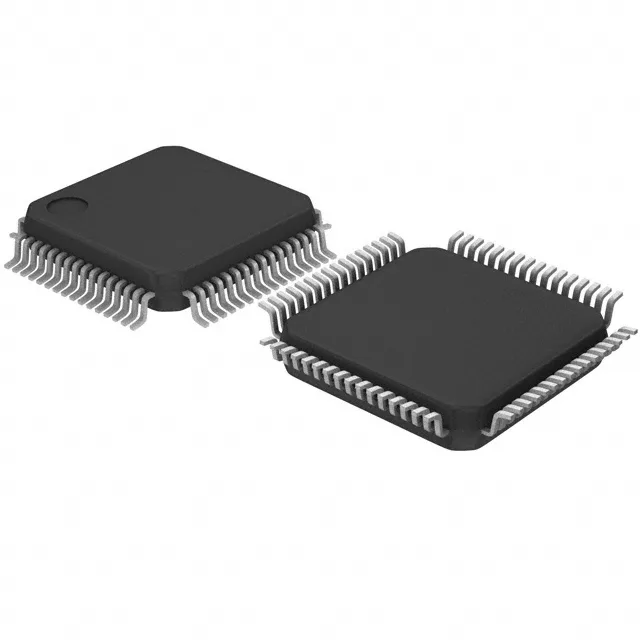
STMicroelectronics STM32F100RBT6BTR — Microcontrollers & Processors (MCU / MPU / DSP)

STM32F100RBT6BTR STM32F1 ARM Cortex-M3 MCU, 24 MHz

MPNSTM32F100RBT6BTR
Active

STMicroelectronics STM32F1 series, STM32F100RBT6BTR, ARM Cortex-M3 32-bit MCU, 24 MHz, 128 KB Flash, 8K x 8 RAM, DMA, PWM, 16x12b ADC, 2x12b DAC, I²C/SPI/UART/USART/IrDA/LINbus, 51 I/O, 2V to 3.6V, -40°C to 85°C, 64-LQFP (10x10 mm).

$6.5100Ref. price · indicative, final on quote
Packaging64-LQFP
RoHSROHS3 Compliant
SeriesSTM32F1
Independent supplier — new & surplus stockAuthenticity-screened · ESD-safe packingListing updated Aug 2026

Specifications

STM32F100RBT6BTR specifications
ParameterValue
SeriesSTM32F1
MountingSurface Mount
Oscillator typeInternal
Program memory typeFLASH
Voltage - supply (Vcc (Vdd))2V ~ 3.6V
Operating temperature-40°C ~ 85°C (TA)
Speed24MHz
PackageTape & Reel (TR) Cut Tape (CT)
RAM size8K x 8
Core size32-Bit Single-Core
PeripheralsDMA, PDR, POR, PVD, PWM, Temp Sensor, WDT
ConnectivityI²C, IrDA, LINbus, SPI, UART/USART
Number of i (O)51
Core processorARM® Cortex®-M3
Case64-LQFP
Data convertersA/D 16x12b; D/A 2x12b
Program memory size128KB (128K x 8)

Product details

24 MHz Cortex-M3 — value-line control for industrial and motor-drive boards

It is built for cost-sensitive control applications where the full 72 MHz of the STM32F103 line is unnecessary — think motor-drive feedback loops, industrial sensor hubs, and HMI panels that need a proven Cortex-M3 core without paying for extra clock cycles. The 24 MHz ceiling keeps the flash wait states at zero for single-cycle access, so tight loops in interrupt handlers don't stall on the bus.

The 128 KB program memory is enough for moderate-complexity control firmware — a field-oriented motor-control stack with CANopen, or a multi-sensor data logger with a simple RTOS. The 8 KB RAM is the tighter constraint: it limits buffering for high-rate ADC captures or large communication packets. If your application needs more than a few kilobytes of working memory for DMA transfers or a TCP/IP stack, budget for external SRAM or step up to the STM32F103 series with its 20 KB or 48 KB options.

64-LQFP (10x10 mm) — 51 I/Os in a routable footprint

With 51 I/Os available, you get headroom for parallel LCD data buses, multiple UARTs, and SPI/I²C peripherals without multiplexing.

Rated for the industrial temperature span, this MCU handles outdoor telecom cabinets, factory-floor motor drives, and engine-bay-adjacent electronics without the cost premium of an automotive-grade part.

Frequently asked questions

Is STM32F100RBT6BTR a direct replacement for STM32F100RBT6?

Yes, the STM32F100RBT6BTR is functionally identical to the STM32F100RBT6. The 'BTR' suffix indicates Tape & Reel packaging (for automated pick-and-place) versus the tray or tube packaging of the base part. All electrical specifications, pinout, and firmware are the same.

What are the differences between STM32F100RBT6BTR and STM32F103RBT6?

The STM32F103RBT6 runs at 72 MHz (versus 24 MHz) and offers up to 128 KB Flash and 20 KB RAM, plus USB and CAN connectivity that the STM32F100 lacks. The STM32F100 is the value-line part — lower clock speed, no USB/CAN, but lower cost and power. Both share the same 64-LQFP footprint and Cortex-M3 core, so a board designed for one can often accommodate the other with firmware changes.

What programming tool works with STM32F100RBT6BTR?

Standard ARM Cortex-M3 debug tools work: ST-Link (included on ST's Nucleo and Discovery boards), J-Link, and any CMSIS-DAP probe. The SWD interface uses the standard 4-pin (SWDIO, SWCLK, GND, VCC) connection. STM32CubeIDE, Keil MDK, and IAR EWARM all support this device.