At 24 MHz the Cortex-M3 delivers around 30 DMIPS, enough for sensor fusion loops, brushless-DC motor commutation, or Modbus protocol stacks. The 8 KB SRAM limits data buffers — a 1 KB Modbus holding register plus a 2 KB ADC ring buffer leaves about 5 KB for stack and variables. If the application needs larger frame buffers or a TCP/IP stack, step up to the 128 KB Flash / 16 KB SRAM variants in the same package.
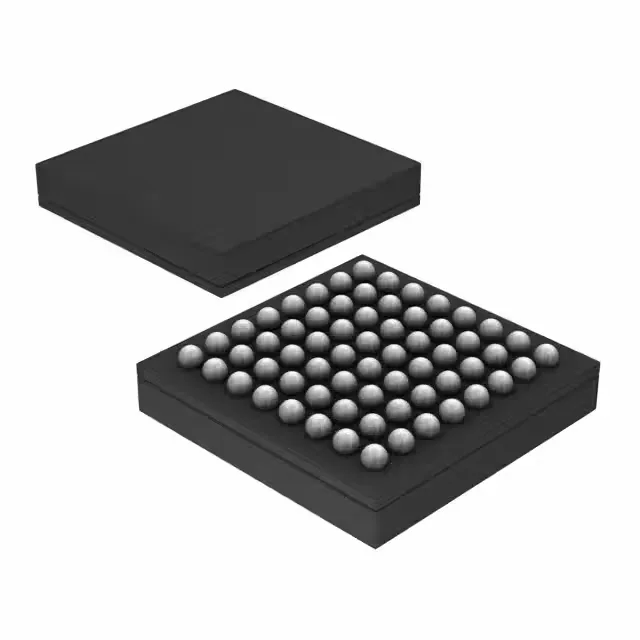
The 64-TFBGA measures 5x5 mm with 0.5 mm ball pitch. That is a fine-pitch BGA — not a hand-solder package. The board needs a solder-mask-defined pad, via-in-pad for the centre balls, and X-ray inspection after reflow. Moisture sensitivity is MSL 3 per the STM32F1 family default; bake the trays at 125°C for 48 hours if the sealed bag has been open longer than the floor-life window. The 64-pin LQFP sibling (STM32F100R8T6) is a drop-in alternative for designs that prefer a perimeter-lead package.
The base product number STM32F100 covers multiple Flash and RAM density options in the same 64-TFBGA footprint, so a firmware-only migration to a higher-density variant is possible without a board spin.