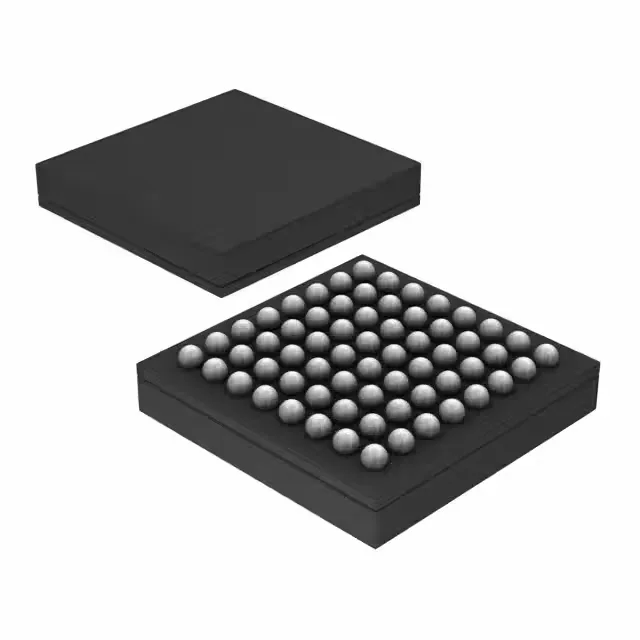
STMicroelectronics STM32F100R6H6B — Microcontrollers & Processors (MCU / MPU / DSP)

STM32F100R6H6B STM32 Value Line MCU, 24 MHz, 32 KB Flash

MPNSTM32F100R6H6B
Active

STMicroelectronics STM32F100R6H6B, STM32F1 Value Line, ARM Cortex-M3 32-Bit MCU, 24 MHz, 32 KB Flash, 4 KB RAM, 51 I/O, 64-TFBGA, -40 to 85 °C.

$2.9502Ref. price · indicative, final on quote
Independent supplier — new & surplus stockAuthenticity-screened · ESD-safe packingListing updated Jul 2026

Specifications

STM32F100R6H6B specifications
ParameterValue
SeriesSTM32F1
MountingSurface Mount
Oscillator typeInternal
Program memory typeFLASH
Voltage - supply (Vcc (Vdd))2V ~ 3.6V
Operating temperature-40°C~85°C(TA)
Speed24MHz
PackageTray
RAM size4K x 8
Core size32-Bit Single-Core
PeripheralsDMA, PDR, POR, PVD, PWM, Temp Sensor, WDT
ConnectivityI²C, IrDA, LINbus, SPI, UART/USART
Number of i (O)51
Core processorARM® Cortex®-M3
Case64-TFBGA
Data convertersA/D 16x12b; D/A 2x12b
Program memory size32KB (32K x 8)

Product details

Value-line Cortex-M3 in a BGA — what the 64-TFBGA means for the board

It targets cost-sensitive embedded control applications — motor drives, sensor hubs, user interfaces, and industrial I/O — where the peripheral set (DMA, PDR, POR, PVD, PWM, temp sensor, WDT) covers the common housekeeping tasks without paying for a full-featured STM32F103. The 64-TFBGA package is the main differentiator from the more common LQFP variants. This is not a hand-reworkable package; if you need to spin a prototype on a two-layer board with a hot-air station, the LQFP-48 or LQFP-64 sibling is the practical choice.

24 MHz and 32 KB Flash — sizing the firmware budget

At 24 MHz the Cortex-M3 delivers enough throughput for 10–50 kHz control loops, UART polling at 115.2 kbaud, and moderate sensor fusion. The 32 KB Flash fills firmware for a single-purpose controller — a fan speed regulator, a keypad decoder, a simple CAN gateway — but leaves little room for a full RTOS plus application stack. The 4 KB SRAM (organized as 4K x 8) similarly constrains data buffers; a 1 KB Ethernet or USB descriptor would consume a quarter of it, so this part is best matched to I²C, SPI, and UART-based designs.

ST continues to manufacture the STM32F1 Value Line, and there is no announced EOL or last-time-buy window.

Frequently asked questions

What is the closest pin-compatible alternative to STM32F100R6H6B in this component family?

Within the STM32F1 Value Line, the STM32F100R6H6BTR is the tape-and-reel variant of the same die and package — identical silicon, same 24 MHz, 32 KB Flash, and 64-TFBGA footprint. The only difference is the shipping medium: tray (H6B) versus tape-and-reel (H6BTR). For a higher-density sibling with the same pinout, the STM32F100R8H6B offers 64 KB Flash in the same 64-TFBGA.