It is built for cost-sensitive control applications where the Cortex-M3 core delivers a clean performance uplift over 8- or 16-bit architectures without the overhead of a full-featured STM32F103. The 24 MHz ceiling is enough for sensor fusion loops, UART/I²C/SPI protocol handling, and basic motor or relay sequencing — but not for heavy DSP or high-frame-rate graphics.
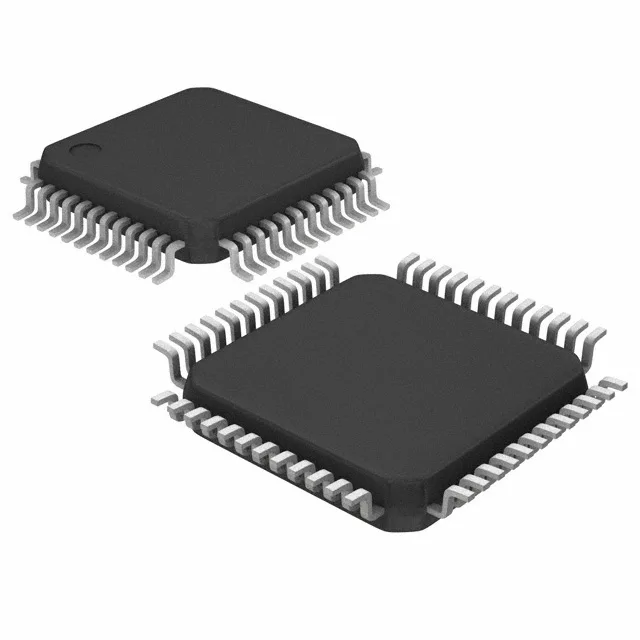
STM32F100C6T7B ARM Cortex-M3 MCU, 24 MHz, 32 KB Flash
MPNSTM32F100C6T7B
Active
STMicroelectronics STM32F100C6T7B, STM32F1 series, 32-Bit Single-Core ARM Cortex-M3 MCU, 24 MHz, 32KB Flash, 4K x 8 RAM, 48-LQFP, -40°C to 105°C.
$2.6656Ref. price · indicative, final on quote
Independent supplier — new & surplus stockAuthenticity-screened · ESD-safe packingListing updated Jul 2026
Specifications
| Parameter | Value |
|---|---|
| Series | STM32F1 |
| Mounting | Surface Mount |
| Oscillator type | Internal |
| Program memory type | FLASH |
| Voltage - supply (Vcc (Vdd)) | 2V ~ 3.6V |
| Operating temperature | -40°C ~ 105°C (TA) |
| Speed | 24MHz |
| Package | Tray |
| RAM size | 4K x 8 |
| Core size | 32-Bit Single-Core |
| Peripherals | DMA, PDR, POR, PVD, PWM, Temp Sensor, WDT |
| Connectivity | I²C, IrDA, LINbus, SPI, UART/USART |
| Number of i (O) | 37 |
| Core processor | ARM® Cortex®-M3 |
| Case | 48-LQFP |
| Data converters | A/D 10x12b; D/A 2x12b |
| Program memory size | 32KB (32K x 8) |
Product details
Frequently asked questions
What is the operating frequency of STM32F100C6T7B?
The core runs at 24 MHz, which is the maximum clock from the internal oscillator or an external source. This is the value-line speed tier — adequate for control loops and serial communication, not for high-throughput DSP.
Is STM32F100C6T7B pin-compatible with STM32F103?
The STM32F100C6T7B shares the same 48-LQFP footprint as the STM32F103CxT6 parts, but the peripheral set and clock tree differ. The STM32F103 offers higher clock speeds (up to 72 MHz) and a full-speed USB, while the STM32F100 is the value-line variant with a 24 MHz ceiling and no USB. Pin compatibility is not guaranteed across all signals — check the respective datasheets for the specific pin assignments before swapping.