That combination is enough to run a modest RTOS, a CANopen stack, and a PID loop on the same chip — the 48 MHz PLL keeps the core fed without wait-state surprises as long as you set one flash wait cycle before crossing 24 MHz.
Industrial temperature range — where this part actually runs
If your design lives indoors at 25°C, you are paying for headroom you do not need — but for anything that rides a forklift or sits on a roof, that 105°C ceiling is the difference between a field return and a five-year run.
Connectivity and peripherals — what the 88 I/Os connect to
With 88 GPIOs in a 100-LQFP package, this part can drive a parallel LCD, read a matrix keypad, and still leave pins for CAN, two I²C buses, and two SPI ports. The CAN interface (bxCAN) handles the 125 kbps to 1 Mbps rates common in industrial automation and automotive body networks. The I²S peripheral is useful for audio codec glue in intercom or voice-alert systems. DMA offloads the core for peripheral-to-memory transfers, which matters when you are streaming ADC samples at 1 MSPS.
Lifecycle and BOM planning
The ROHS3 compliance covers the current EU directive. For dual-sourcing resilience, the STM32F0 family has broad pin compatibility across density options, but there is no second-source vendor for this exact part; your supply chain sits on ST's own fabs.
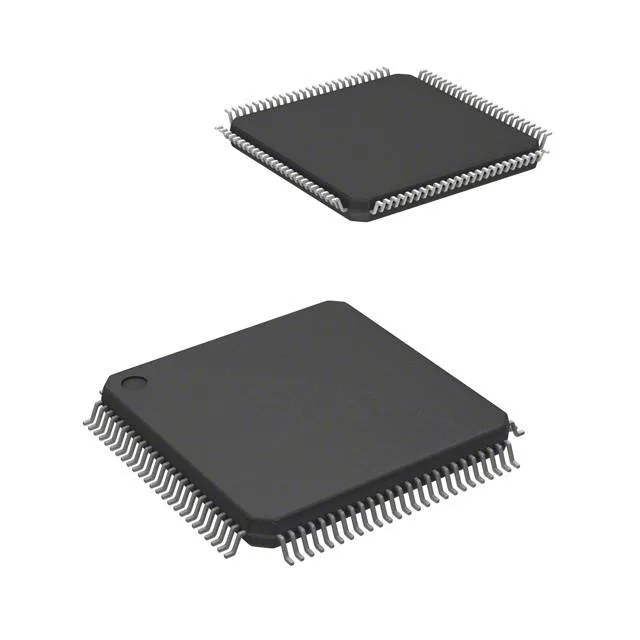
The 100-LQFP (14x14 mm body) is a hand-solderable package with 0.5 mm pitch — reworkable with a hot-air station and flux, no X-ray needed. The exposed pad (if present on this variant) should be stitched to ground with vias under the package for thermal relief; without them, junction temperature rises faster above 85°C ambient.