What this Cortex-M0 brings to the board
At 48 MHz the Cortex-M0 executes most single-cycle instructions, so a 10 kHz PID loop leaves about 4800 cycles for the math and peripheral handling. That is enough for a basic motor current loop or a sensor fusion filter, but if you need floating-point or heavy DSP, step up to the Cortex-M4 siblings.
That means you can run the MCU from a single 1.8 V rail (common in battery-powered designs) or from a 3.3 V rail (standard in industrial 24 V systems with a regulator). The dual-range also allows level-shifting-free connection to 1.8 V peripherals. Dropout on the internal regulator is not specified here, but the 1.65 V minimum gives about 150 mV headroom on a 1.8 V supply — tight, so keep the rail clean.
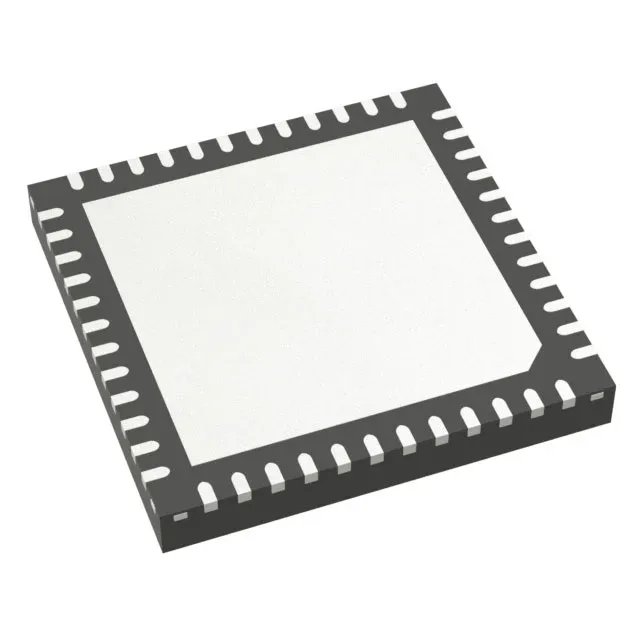
The 48-UFQFN package with exposed pad helps junction-to-ambient thermal performance, but at 85°C ambient the internal regulator derates — keep the I/O current per pin under the datasheet limit (not repeated here) to stay inside the SOA.
For dual-sourcing resilience, the STM32F0 series has pin-compatible density variants — the STM32F058C6 (32 KB Flash) and STM32F058R8 (64 KB Flash, 64-pin) — but no official second source outside ST.