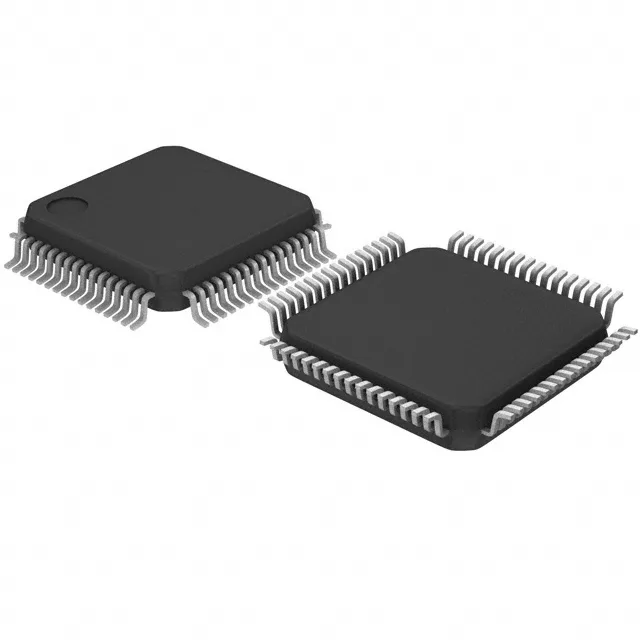
STMicroelectronics STM32F051R6T7TR — Microcontrollers & Processors (MCU / MPU / DSP)

STM32F051R6T7TR STM32F0 ARM Cortex-M0 MCU, 48 MHz

MPNSTM32F051R6T7TR
Active

STMicroelectronics STM32F0 series STM32F051R6T7TR, ARM Cortex-M0 32-bit MCU, 48 MHz, 32 KB Flash, 8 KB RAM, 55 I/O, 64-LQFP, -40 to 105°C.

$4.5100Ref. price · indicative, final on quote
Packaging64-LQFP
RoHSROHS3 Compliant
SeriesSTM32F0
Independent supplier — new & surplus stockAuthenticity-screened · ESD-safe packingListing updated Aug 2026

Specifications

STM32F051R6T7TR specifications
ParameterValue
SeriesSTM32F0
MountingSurface Mount
Oscillator typeInternal
Program memory typeFLASH
Voltage - supply (Vcc (Vdd))2V ~ 3.6V
Operating temperature-40°C ~ 105°C (TA)
Speed48MHz
PackageTape & Reel (TR) Cut Tape (CT)
RAM size8K x 8
Core size32-Bit Single-Core
PeripheralsDMA, I²S, POR, PWM, WDT
ConnectivityHDMI-CEC, I²C, IrDA, LINbus, SPI, UART/USART
Number of i (O)55
Core processorARM® Cortex®-M0
Case64-LQFP
Data convertersA/D 19x12b; D/A 1x12b
Program memory size32KB (32K x 8)

Product details

Memory ceiling and analog integration — what fits in 32 KB / 8 KB

The STM32F051R6T7TR: The 19-channel 12-bit ADC lets you sample multiple analog inputs without an external mux, and the single 12-bit DAC provides one analog output for setpoint generation or waveform synthesis. The internal oscillator saves the crystal BOM cost for applications that can tolerate ±1% accuracy over temperature.

The base product number is STM32F051, and the series is STM32F0. For dual-sourcing, the STM32L151CBU6A is a different architecture (Cortex-M3 at 32 MHz, 1.8 V supply, 85°C max) — not a pin-compatible second source, but a lower-power sibling if the project later needs USB and extended battery life.

The MCU is supplied in a 64-LQFP package with a 10x10 mm body, surface-mount. Supply voltage range is 2.0 V to 3.6 V, covering 3.3 V and 2.5 V rails. ROHS3 compliant.

Frequently asked questions

What is the difference between STM32F051R6T7TR and STM32F051R6T6?

The difference is in the shipping medium and temperature grade suffix. The core silicon and memory configuration are identical.