48 MHz Cortex-M0 — enough for control-loop and interface tasks
The ARM Cortex-M0 core at 48 MHz is a lean, single-cycle machine suited for sensor polling, protocol bridging, and real-time control loops. It does not have a hardware divider or single-cycle multiply like the M3/M4, but for UART-to-CAN gateways, motor commutation at moderate PWM rates, or USB HID-class devices, the 48 MHz clock keeps the firmware simple and the power draw low.
32 KB Flash, 6 KB SRAM — sizing the firmware and data buffers
The 6 KB SRAM leaves room for two 512-byte USB buffers plus a CAN mailbox and a modest stack. If the application needs over-the-air updates, the 32 KB Flash limits the image to one active plus one backup slot — plan the linker script accordingly.
USB and CAN on a 5 mm × 5 mm package
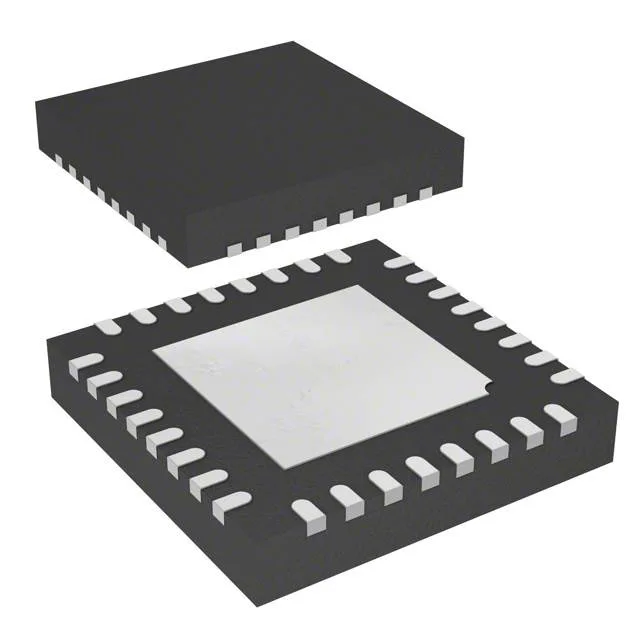
The 32-UFQFPN (5x5 mm) package with exposed pad keeps the board area small while still offering 26 GPIOs. USB 2.0 full-speed device and CAN 2.0B are both on-chip, which is unusual for a package this compact — it saves an external USB-to-serial bridge or a separate CAN controller. The 13-channel 12-bit ADC is enough for reading analog sensors or monitoring a power rail. DMA and a PWM timer round out the peripheral set for motor-drive or lighting applications.
STMicroelectronics lists the STM32F042K6U7 as Active. The base product number STM32F042 covers several Flash and package variants, so if a future project needs more memory, the pin-compatible STM32F042K8 (64 KB Flash) or STM32F042G4 (16 KB Flash) are available without a PCB change.