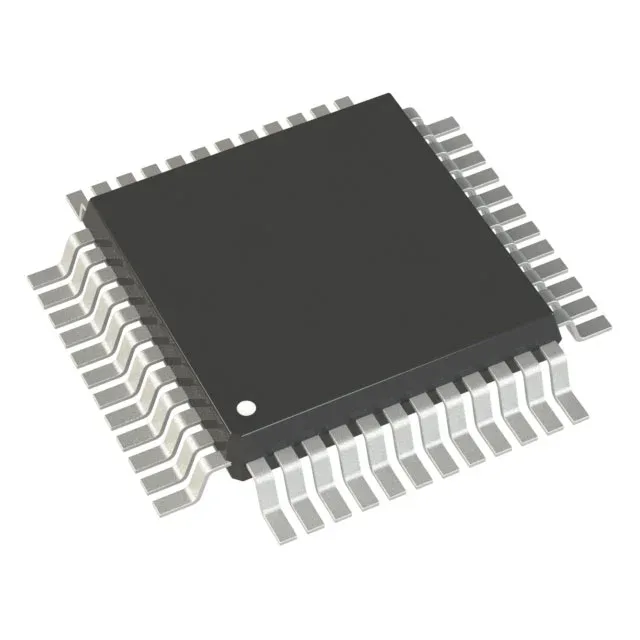
48 MHz Cortex-M0 with USB and CAN in a 32-pin LQFP
It integrates USB 2.0 device controller, CANbus, multiple I²C/SPI/UART interfaces, a 13-channel 12-bit ADC, and an internal oscillator — all in a compact 32-LQFP package.
Industrial temperature grade — what it buys you
The 105°C ceiling is worth noting: many STM32F0 siblings top out at 85°C, so this variant is the one to spec when the enclosure gets warm or the PCB sits near a motor drive. At the low end, 1.65 V operation lets the MCU stay alive during battery discharge without a boost converter — useful for portable and battery-backed designs.
USB device capability — confirmed on the connectivity list
The USB peripheral supports control, bulk, and interrupt transfers — enough for virtual COM port, HID, or custom device class implementations. The 32 KB Flash and 6 KB RAM are tight for composite USB devices, but a single-interface USB CDC or HID firmware fits comfortably.
Housed in a 32-LQFP (7x7 mm body, 0.8 mm pitch), this is a hand-solderable, inspectable package — no BGA rework needed. The exposed pad is not present on this package variant, so all heat dissipation goes through the leads. For a 48 MHz Cortex-M0 drawing maybe 20-30 mA typical, that's fine; just ensure adequate copper on the power pins. The tray shipping medium means the parts arrive in antistatic trays, not tape-and-reel — factor that into your pick-and-place feeder setup if you're running high volume.