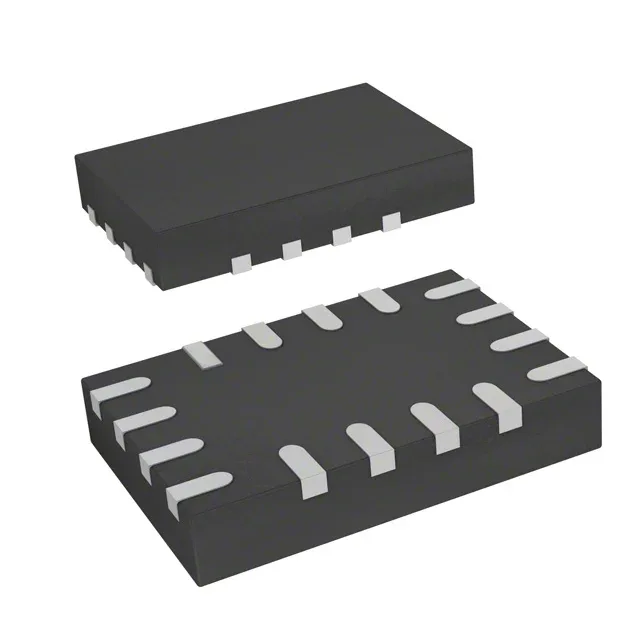
STMicroelectronics STG5682QTR — Discrete Semiconductors

STG5682QTR Analog Switch, SPDT, 550mOhm, 33MHz, 16-QFN

MPNSTG5682QTR
End of Life

STMicroelectronics STG5682QTR, dual SPDT analog switch, 550mOhm max on-resistance, 33MHz -3dB bandwidth, 1.65V to 4.5V supply, 16-QFN (2.6x1.8) package, -40°C to 85°C.

$2.81Ref. price · indicative, final on quote
Packaging16-UFQFN
RoHSROHS3 Compliant
Independent supplier — new & surplus stockAuthenticity-screened · ESD-safe packingListing updated Aug 2026

Specifications

STG5682QTR specifications
ParameterValue
MountingSurface Mount
Voltage - supply, single (V+)1.65V ~ 4.5V
Current - leakage (IS(off))100nA
Operating temperature-40°C ~ 85°C (TA)
-3db bandwidth33MHz
PackageTape & Reel (TR); Cut Tape (CT)
Crosstalk-60dB @ 100kHz
Case16-UFQFN
Switch circuitSPDT
Charge injection126pC
Number of circuits2
On-State resistance550mOhm
Switch time (Ton, toff)80ns, 50ns
Multiplexer (Demultiplexer circuit)2:1
Channel-to-Channel matching (ΔRon)15mOhm
Channel capacitance (CS(off), CD(off))6pF

Product details

Dual SPDT switch for low-voltage signal routing

The -3dB bandwidth of 33MHz and crosstalk of -60dB at 100kHz make it usable for low-frequency analog signals — audio line-level, sensor outputs, or slow data paths — where channel isolation matters. Charge injection is 126pC typical, a figure to watch in sample-and-hold or precision integrator front-ends where injected charge can shift the held voltage.

For dual-source planning, there is no official pin-compatible second source listed — the part is unique to STMicroelectronics' portfolio in this package and resistance class.

Frequently asked questions

What is the on-resistance of STG5682QTR?

The maximum on-resistance is 550mOhm. Channel-to-channel matching is 15mOhm max, so the two SPDT switches track each other closely.

Is STG5682QTR obsolete or active?

The part is Active and ROHS3 compliant. No end-of-life notice is in effect.

What is the charge injection of STG5682QTR?

Charge injection is 126pC typical. This is the charge transferred to the output when the switch turns off — relevant for sample-and-hold circuits.