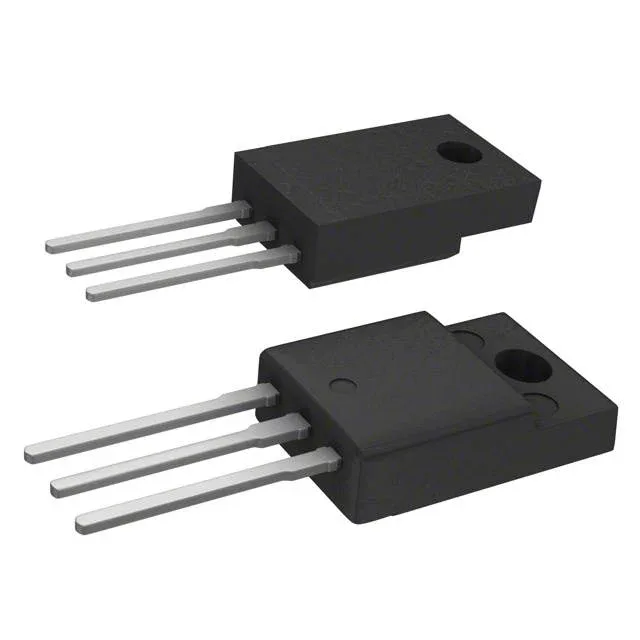
STMicroelectronics STF20NK50Z — Discrete Semiconductors

STF20NK50Z N-Channel MOSFET, 500 V, 17 A, SuperMESH™

MPNSTF20NK50Z
Obsolete

STMicroelectronics SuperMESH™ series, STF20NK50Z, N-Channel MOSFET, 500 V Vdss, 17 A Id, 270 mOhm Rds(on) at 8.5 A, 10 V, 119 nC Qg, TO-220-3 Full Pack, Through Hole, 150°C junction.

$3.5300Ref. price · indicative, final on quote
Independent supplier — new & surplus stockAuthenticity-screened · ESD-safe packingListing updated Jul 2026

Specifications

STF20NK50Z specifications
ParameterValue
SeriesSuperMESH™
FET typeN-Channel
MountingThrough Hole
Drain to source voltage500 V
Drive voltage (Max rds on, min rds on)10V
Current - continuous drain (Id) @ 25°C17A (Tc)
Power dissipation40W (Tc)
Operating temperature150°C (TJ)
PackageTube
Vgs±30V
TechnologyMOSFET (Metal Oxide)
CaseTO-220-3 Full Pack
Vgs(th) (Max) @ id4.5V @ 100µA
Rds on (Max) @ id, vgs270mOhm @ 8.5A, 10V
Gate charge (Qg) (Max) @ vgs119 nC @ 10 V
Input capacitance (Ciss) (Max) @ vds2600 pF @ 25 V

Product details

STMicroelectronics lists the STF20NK50Z as Obsolete.

Full-pack isolation — no mica, but watch the thermal budget

The 40 W power dissipation ceiling at case temperature reflects the higher junction-to-case thermal resistance.

Parametric fit for a 500 V offline converter

The 2600 pF input capacitance at 25 V drain bias and 119 nC total gate charge are typical for a 500 V, 17 A class device in this generation of SuperMESH™ planar technology. The ±30 V maximum gate-source rating gives margin for gate-drive overshoot in hard-switched topologies. The 4.5 V gate threshold at 100 µA drain current means the device is fully enhanced with a standard 10 V gate drive — the drive voltage for rated Rds(on) is 10 V.

Frequently asked questions

Is STF20NK50Z obsolete?

Yes. STMicroelectronics lists the product status as Obsolete.

What is the Rds(on) of STF20NK50Z?

The maximum Rds(on) is 270 mOhm at 8.5 A drain current with 10 V gate-to-source drive. This is the on-resistance at 25°C junction; actual resistance rises with junction temperature per the normalised curve in the datasheet.