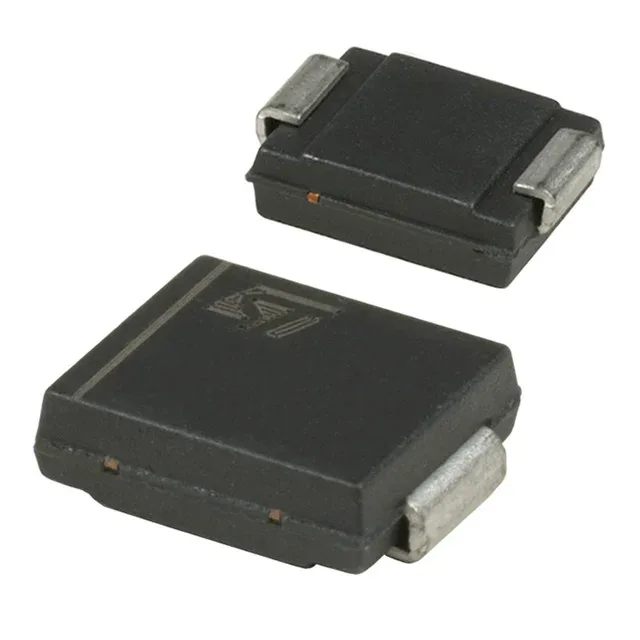
What the SMCJ20A-TR is and what it protects
It uses a Zener breakdown structure to shunt surge energy away from sensitive downstream circuitry. With a peak pulse power rating of 1500W (1.5kW) and a clamping voltage of 42.8V at the peak pulse current of 234A (tested with an 8/20µs waveform), this part handles the kind of surge you see from inductive load dumps, lightning-induced transients, or ESD events in industrial and telecom equipment.
Voltage ratings and the protection window
The reverse standoff voltage is 20V — the rail voltage the part sits across without conducting in normal operation. The breakdown voltage is guaranteed to start clamping between 22.2V (minimum) and the clamping maximum of 42.8V. That 20V to 42.8V window means the protected rail must tolerate the clamping voltage without latch-up or damage. For a 20V supply bus, this is a standard fit; for a 15V rail, the clamping voltage may be too high and a lower-voltage SMCJ variant should be selected.
Peak pulse power and current — what the numbers mean
The 1500W peak pulse power is measured with a 10/1000µs waveform, while the 234A peak pulse current is specified with an 8/20µs waveform — the faster rise time of the 8/20µs pulse delivers a higher current for the same energy. In practice, the 234A figure tells you the part can survive a direct lightning surge at the secondary-protection level, or a heavy inductive kickback. The 1500W rating is the thermal limit for a single pulse; repetitive surges need derating per the datasheet curve.