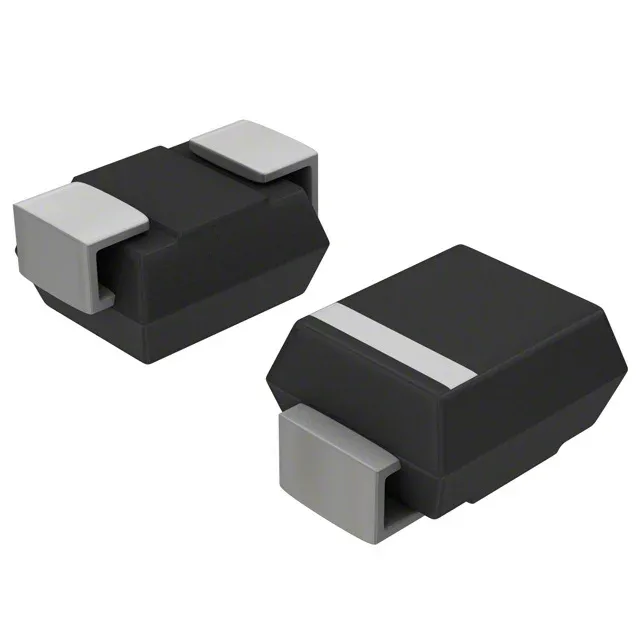
It is a Zener-type device in a surface-mount DO-214AC SMA package, rated for a peak pulse power of 400W. The 44.4V minimum breakdown voltage means the device starts conducting just above the normal operating voltage, and the 84V maximum clamping voltage tells you what the downstream circuitry must survive during a surge event. This part is a general-purpose protector, suited for industrial control, telecom, and power supply applications where a 40V rail needs transient protection across the -55°C to 150°C temperature range.
Clamping voltage and peak current — sizing the protection margin
The 84V clamping voltage at a peak pulse current of 27A (tested with an 8/20µs waveform) is the key parameter for design margin. If your 40V rail feeds a converter rated for 80V absolute maximum, this TVS provides a few volts of headroom before the downstream part sees stress. The 400W peak pulse power rating is the energy-handling envelope for a single pulse; for repetitive surges or longer-duration events, you need to check the derating curve in the datasheet.
DO-214AC footprint — what to check on the board
The part comes in a DO-214AC SMA package, a standard surface-mount footprint for TVS diodes in this power class. For rework, the SMA body is large enough to hand-solder with a fine-tip iron if needed, but a hot-air station is cleaner for removal.