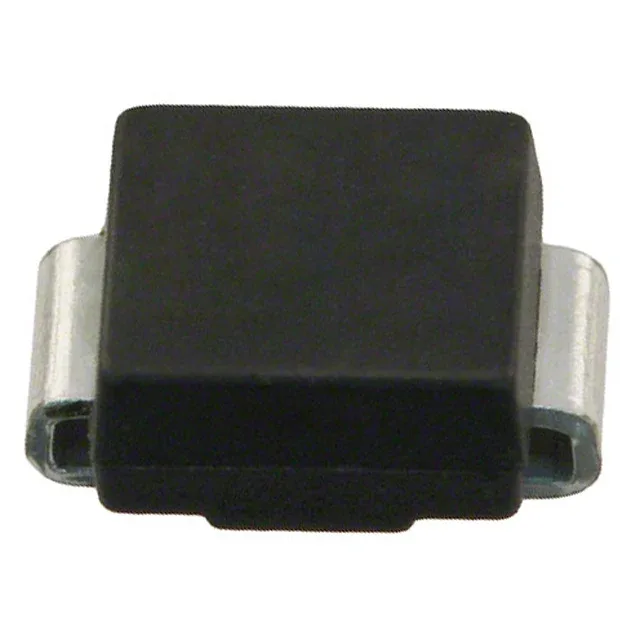
12V automotive rail protector with AEC-Q101 teeth
Rated for 600W peak pulse power (10/1000µs waveform) and capable of shunting 184A for the 8/20µs pulse shape, this part is sized for load-dump and ISO 7637-2 pulse suppression on a 12V bus. The 10.2V reverse standoff voltage means it sits quietly across the rail during normal operation, then avalanches at a minimum of 11.4V and clamps the transient to 21.7V maximum — tight enough to keep downstream electronics inside their absolute-maximum ratings.
Breakdown and clamping — the three numbers that decide fit
For a 12V nominal automotive rail, the SM6T12CAY's 10.2V standoff provides margin against steady-state ripple and cold-crank dips without the diode conducting. The 11.4V minimum breakdown ensures the device starts clamping before the protected circuitry sees damage, and the 21.7V maximum clamping voltage keeps the let-through energy within the safe operating area of typical 12V-rated ECUs, sensors, and actuators. If your design targets a 24V truck or 48V mild-hybrid bus, this part's standoff is too low — you'd step up to the SM6T24 or similar family member. Single bidirectional channel means one component protects both positive and negative transients on the same line, simplifying the BOM and board layout versus back-to-back unidirectional Zeners. No power line protection feature — this is a transient suppressor, not a reverse-polarity or overvoltage lockout device.
Package, footprint, and production status
That means you can commit this line to a multi-year production BOM without scheduling a qualification for a replacement part.