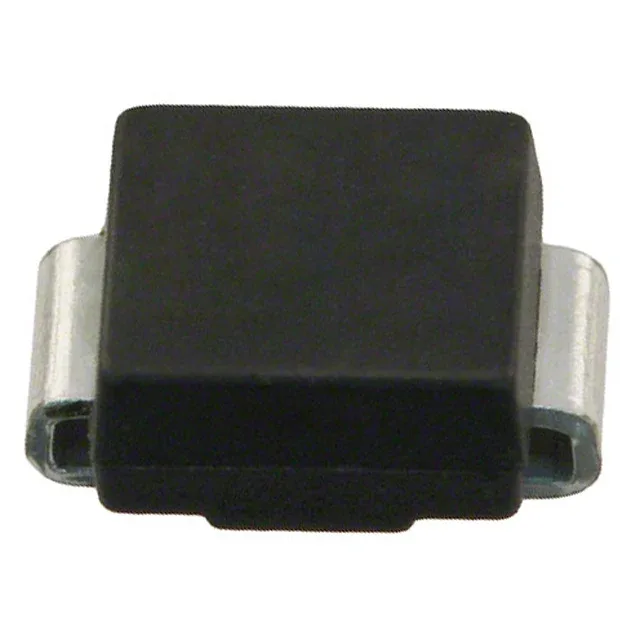
STMicroelectronics SM6T10CA — Circuit Protection

STMicroelectronics SM6T10CA TVS Diode, 600W Bidirectional

MPNSM6T10CA
Active

STMicroelectronics SM6T10CA, TRANSIL™ series, TVS Diode, Zener, Bidirectional, 600W Peak Pulse Power, 8.55V Standoff, 18.6V Clamping, DO-214AA (SMB), Surface Mount, -55°C to 150°C.

$0.5900Ref. price · indicative, final on quote
Independent supplier — new & surplus stockAuthenticity-screened · ESD-safe packingListing updated Aug 2026

Specifications

SM6T10CA specifications
ParameterValue
TypeZener
SeriesSM6T, TRANSIL™
MountingSurface Mount
Voltage - breakdown9.5V
Voltage - clamping (Max) @ ipp18.6V
Voltage - reverse standoff8.55V
Current - peak pulse (10/1000μs)215A (8/20µs)
Power - peak pulse600W
Power line protectionNo
Operating temperature-55°C~150°C(TJ)
PackageTape & Reel (TR); Cut Tape (CT)
ApplicationsGeneral Purpose
CaseDO-214AA, SMB
Bidirectional channels1

Product details

What the 600W rating means for your protection budget

The clamping voltage of 18.6 V at 215 A (8/20 µs) gives the designer a hard ceiling: anything above that passes through to the protected circuit. For a 5 V or 3.3 V logic rail, this part is overkill; it is sized for 8 V to 12 V bus protection where the standoff voltage of 8.55 V provides margin above the nominal rail.

Package and mounting — surface-mount footprint check

The SMB footprint is standard and shared with many other TVS diodes in the same power class, which simplifies board layout if you need to swap suppliers. No power line protection is built in — this is a standalone transient suppressor, not a integrated filter.

Lifecycle and supply continuity

The base product number SM6T10 allows you to search for the unidirectional variant (SM6T10A) if your design requires polarity-specific clamping.

Frequently asked questions

What is the difference between SM6T10CA and SM6T10A?

The SM6T10CA is the bidirectional version, while the SM6T10A is the unidirectional variant. Both share the same 600 W peak pulse power and 8.55 V standoff voltage, but the bidirectional device clamps equally on positive and negative transients, making it suitable for AC-coupled or floating lines where polarity is unknown.