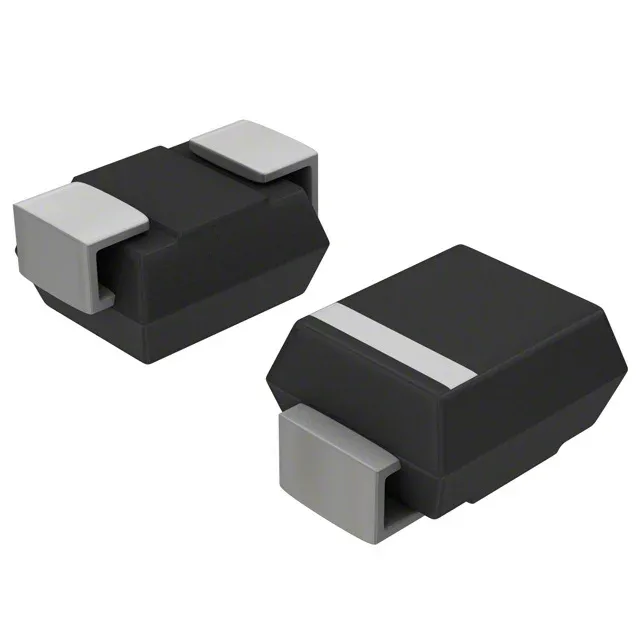
STMicroelectronics SM4T39CAY — Circuit Protection

STMicroelectronics SM4T39CAY TVS Diode, 400W, AEC-Q101

MPNSM4T39CAY
Active

STMicroelectronics SM4T39CAY, Automotive AEC-Q101 TRANSIL™, Zener TVS Diode, 400W Peak Pulse, 33V Standoff, 69.7V Clamp, Bidirectional, DO-214AC SMA, -55°C to 150°C.

$1.0600Ref. price · indicative, final on quote
Sourced new & surplus through independent channelsAuthenticity-screened · ESD-safe packingListing updated Aug 2026

Specifications

SM4T39CAY specifications
ParameterValue
TypeZener
SeriesAutomotive, AEC-Q101, SM4TY, TRANSIL™
MountingSurface Mount
Voltage - breakdown36.7V
Voltage - clamping (Max) @ ipp69.7V
Voltage - reverse standoff33V
Current - peak pulse (10/1000μs)33A (8/20µs)
Power - peak pulse400W
Power line protectionNo
Operating temperature-55°C~150°C(TJ)
PackageTape & Reel (TR); Cut Tape (CT)
ApplicationsAutomotive
CaseDO-214AC, SMA
Bidirectional channels1

Product details

400 W peak pulse, 33 V standoff — what it protects

It clamps transients on a 33 V nominal rail, with a minimum breakdown voltage of 36.7 V and a maximum clamping voltage of 69.7 V at the peak pulse current.

AEC-Q101 and the automotive BOM

Package and footprint — DO-214AC (SMA)

Surface-mount in the DO-214AC (SMA) package. The single bidirectional channel means one device protects a differential pair or a single-ended rail against both positive and negative transients — no polarity concern during assembly.

Frequently asked questions

Is SM4T39CAY AEC-Q101 qualified?

Yes, the SM4T39CAY is listed in the Automotive, AEC-Q101 series, meaning it has passed the AEC-Q101 stress tests for automotive-grade semiconductor devices.

What is the difference between SM4T39CAY and SM4T39A?

The SM4T39CAY is a bidirectional device (single channel for both polarities), while the SM4T39A is a unidirectional variant. Both share the same 33 V standoff, 400 W peak pulse rating, and DO-214AC package, but the unidirectional version has a dedicated cathode for positive rail protection. The bidirectional version is typically chosen for AC lines or differential signal pairs where polarity is not fixed.