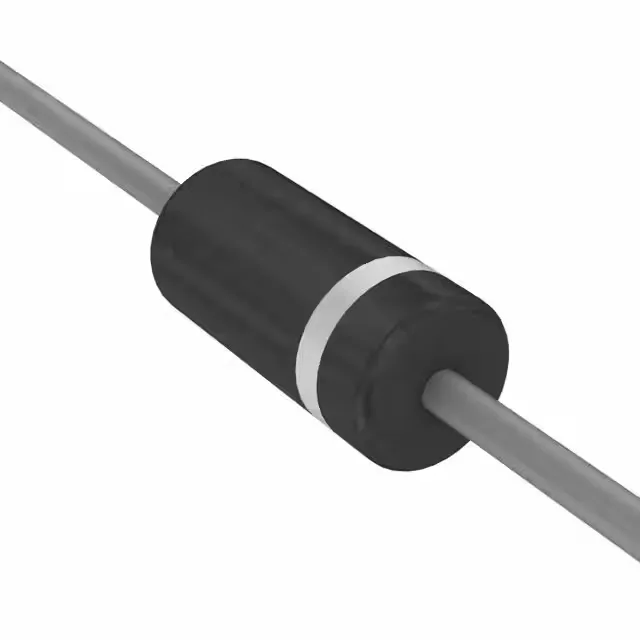
600W Zener TVS — 33.3 V standoff, DO-15 axial
The STMicroelectronics P6KE39CARL is a 600 W peak-pulse Zener transient-voltage-suppression (TVS) diode from the P6KE / TRANSIL™ series, housed in a DO-15 (DO-204AC) axial-lead package for through-hole mounting. It is a bidirectional device — a single component clamps transients of either polarity on a 33.3 V nominal rail, with a minimum breakdown of 37.1 V and a maximum clamping voltage of 69.7 V at the rated peak pulse current of 57 A (8/20 µs waveform). This part is sized for general-purpose surge protection on power buses, signal lines, and DC supplies in industrial, telecom, and consumer equipment where a single TVS must absorb a defined energy pulse without latching or degradation.
For BOM lines that cannot redesign the protection footprint, the surplus and broker channel is the realistic supply path — independent distributors hold remaining inventory of the DO-15 axial variant.
The 33.3 V reverse standoff voltage is the maximum continuous DC or peak AC voltage the diode will not conduct on — it sits below the 37.1 V minimum breakdown, so a 28 V or 30 V rail is well within the safe operating window. The 69.7 V clamping voltage at 57 A (8/20 µs) defines the peak voltage the protected circuit sees during a surge: a downstream device rated for 75 V or higher has margin; a 60 V-rated component does not. The 600 W peak-pulse rating (10/1000 µs waveform) gives the energy-absorption capacity for a single event — derate for repetitive surges or higher ambient temperature per the datasheet's pulse-derating curve.
Design-in: DO-15 axial, bidirectional
The DO-15 (DO-204AC) axial package is a through-hole lead form — the body is inserted into a PCB hole and wave-soldered or hand-soldered. The bidirectional channel means a single device replaces two back-to-back Zeners for AC or bipolar transient protection. Capacitance of 450 pF at 1 MHz is low enough for 50/60 Hz power lines and most DC buses, but it will load a high-speed data pair — not a candidate for Ethernet or CAN-FD signal lines without checking the signal rise-time budget. No power line protection rating (the part lacks internal coordination for mains overvoltage), so it is intended for secondary-side DC rails, not AC mains input.