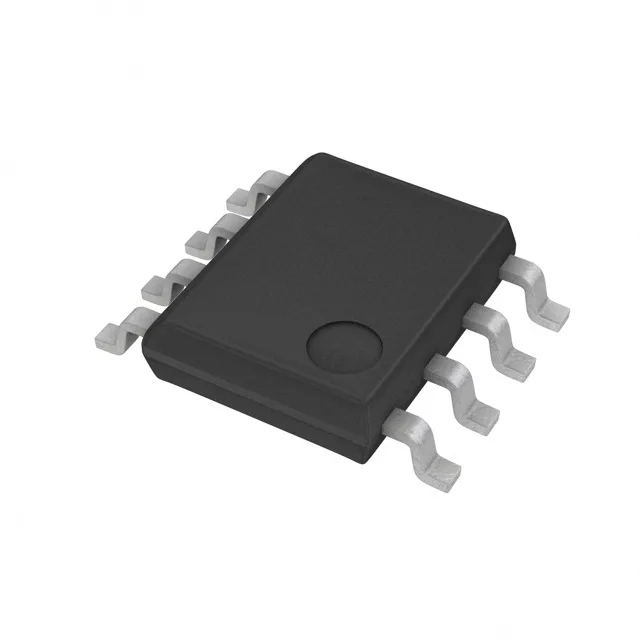
What the 8-MiniSO footprint means for your board
The LMV358LIST comes in an 8-MiniSO package (the supplier device package name for the 8-TSSOP / 8-MSOP 3.00 mm wide body). It's a surface-mount part with a 0.65 mm pin pitch — hand-solderable with a fine tip and some flux, but a hot-air station or small oven profile makes the job cleaner. The low 1.1 mm seated height keeps it friendly for tight stacked boards. Two op-amps in one 8-pin package means you save board area compared to two single-channel parts. The 130 µA per-channel supply current (260 µA total) keeps the thermal footprint low — no special copper pour needed for heat sinking in most signal-chain applications.
Signal-chain fit: gain-bandwidth and slew rate
For a unity-gain buffer, the small-signal bandwidth is 1.3 MHz; at a gain of 10, it drops to 130 kHz — enough for most thermocouple, strain-gauge, or photodiode front-ends that don't need fast edges. The 27 nA input bias current is moderate — fine for circuits with source impedances below 100 kΩ. If you're working with high-impedance sensors (MΩ range), consider a CMOS-input op-amp instead; the bias current here will create a noticeable voltage drop across the source resistance.
Rail-to-rail output and supply range
Each channel can source or sink up to 70 mA, enough to drive an ADC input, a small LED, or a modest cable capacitance. The 1 mV typical input offset voltage is decent for general-purpose work; if you need sub-mV precision, look at the zero-drift family.
Temperature grade and deployment range
The wide temperature range also covers cold-start conditions in outdoor telecom gear.
It's a current-production part suitable for both new designs and ongoing BOM replenishment. No minimum order constraint beyond the reel increment.