5V rail from a 5.7V minimum input
The LF50ABV is a 5V fixed-output positive LDO from STMicroelectronics, delivering 500 mA continuous with a maximum dropout of 0.7 V at full load. That means the input rail must stay above 5.7 V across line and load to keep the output in regulation — a 5V logic rail fed from a 6V battery or a 6.5V intermediate bus has comfortable headroom, but a 5.2V pre-regulator does not. The PSRR profile — 76 dB at 120 Hz, rolling off to 60 dB at 10 kHz — tells you where this regulator cleans up noise. It attenuates 120 Hz rectifier ripple by a factor of ~6300, but a 100 kHz switching converter ripple sees only ~32 dB of rejection. Downstream of a buck converter, plan an LC filter ahead of the LDO if the switching frequency sits above 10 kHz. The quiescent current is 1 mA typical, rising to 12 mA max under supply — the 1 mA Iq is low enough for always-on modules on a 24 V bus, but not battery-sleep levels.
Package and board-fit: TO-220-3 vs surface-mount sibling
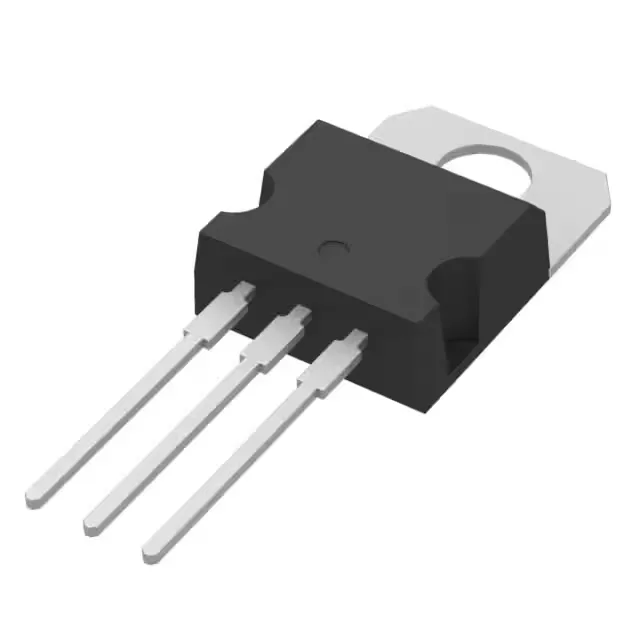
The LF50ABV comes in a TO-220-3 through-hole package. The tab is the output (Vout), so the heatsink or PCB copper plane connects to the 5V rail — not ground. For a 500 mA load with 1V dropout, dissipation is 0.5 W; the TO-220 junction-to-ambient thermal resistance (~65°C/W without a heatsink) keeps the die below 125°C at 25°C ambient, but at 85°C ambient you need a clip-on heatsink or a dedicated copper area on the board. The board spins for a TO-220 cannot accept a DPAK without a layout change, but the electricals swap one-for-one.
STMicroelectronics lists the LF50ABV as Active (current production). There is no last-time-buy clock running, and no successor part has been announced. For a production BOM, this means no urgent redesign needed — but the TO-220 package is increasingly rare in new designs, so if your procurement team is consolidating toward SMT, the DPAK sibling (LF50ABDT-TR) is the natural migration path. The part is ROHS3 compliant.