Active production — what it means for the BOM line
STMicroelectronics lists the L78M12CV-DG lifecycle stage as current — no end-of-life notice, no last-time-buy window. This is a part you can still specify into a new design or order as a replacement without worrying about a PCN closing the supply window. ROHS3 compliant, so it passes the environmental gate for EU and North American markets without an exemption certificate.
12V rail at 500mA — the fit decision
Fixed 12V output, 500mA maximum continuous current. For a 12V logic or analog rail, this is the standard TO-220 three-terminal regulator — the same pinout as the 1A 78M12 and 2A L78S12CV, but in the 500mA-rated die. Input voltage max is 35V, so a 12V rail derived from a 24V DC supply or a 12VAC rectified to ~17V sits well within the dropout headroom. The 6 mA quiescent current is the standing draw — negligible on a powered rail but worth budgeting on a battery-backed 12V bus. On a 12V rail fed from a 50/60Hz transformer, the residual ripple at the output is roughly 1.8 mV per volt of input ripple — clean enough for most analog and digital loads without a post-filter.
TO-220 — the scorch-mark tells you
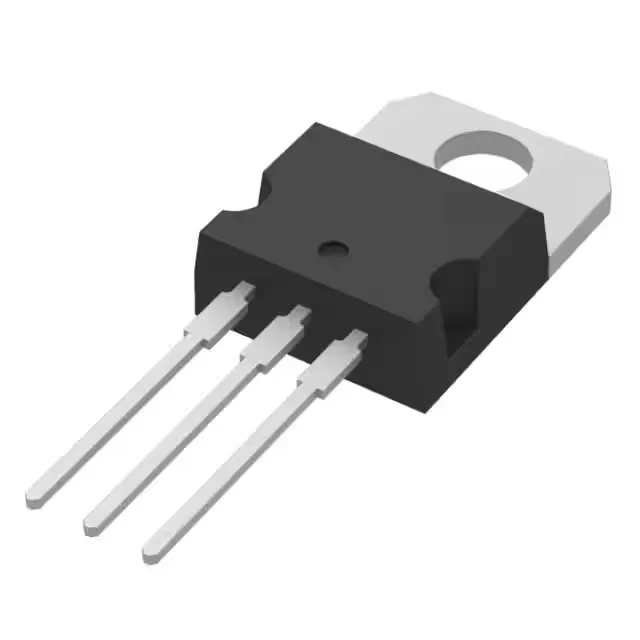
TO-220-3 through-hole package, the same footprint as every 78xx-series regulator since the 1970s. If you are reworking a board and the scorch mark is on the tab of a three-pin device in the 12V position, this is the part that died — and the replacement drops straight in. Built-in over-current, over-temperature, and short-circuit protection. That behaviour is the failure signature you see on a scope.
Peer drop-in — what swaps without rewiring
The L78M09CV (9V output, same 500mA, same TO-220) shares the same pinout and package. If a board was built around the 9V version and you need 12V, the L78M12CV-DG drops into the same footprint — no layout change, just the output voltage difference. The L78S12CV is the 2A sibling in the same TO-220 package. Same 12V output, same pinout, but double the current capability. If the original design used the 500mA part and the rail is marginal, the 2A version is a pin-compatible upgrade without a board spin.