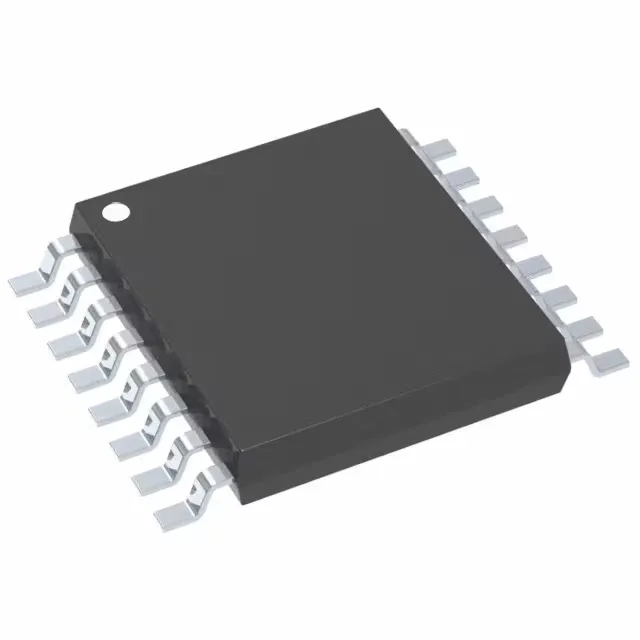
STMicroelectronics L6986H5VTR — Discrete Semiconductors

L6986H5VTR 38V 2A Synchronous Step-Down Regulator, Fixed 5V

MPNL6986H5VTR
End of Life

STMicroelectronics L6986H5VTR synchronous step-down buck converter, 38 V input, 2 A output, fixed 5 V, 16-PowerTSSOP (HTSSOP) package, Tape & Reel.

$2.12118Ref. price · indicative, final on quote
Packaging16-PowerTSSOP (0.173", 4.40mm Width)
Independent supplier — new & surplus stockAuthenticity-screened · ESD-safe packingListing updated Aug 2026

Specifications

L6986H5VTR specifications
ParameterValue
Output typeFixed
MountingSurface Mount
Voltage - input38V
Voltage - output (Min (Fixed))5V
Output current2A
Frequency - switching250kHz ~ 2MHz
I/O channels1
Operating temperature-40°C ~ 150°C (TJ)
PackageTape & Reel (TR)
FunctionStep-Down
TopologyBuck
Case16-PowerTSSOP (0.173\", 4.40mm Width)
Output configurationPositive
Synchronous rectifierYes

Product details

Synchronous buck for 5 V rails in industrial and automotive-grade systems

The L6986H5VTR: The integrated synchronous rectifier eliminates the external freewheeling diode, improving efficiency at lower output voltages and reducing the BOM count.

Input range and switching frequency flexibility

The 4 V minimum input allows operation from a 5 V regulated rail with headroom, while the 38 V maximum covers 24 V industrial buses and 12 V automotive systems with margin for load-dump transients. Switching frequency is programmable from 250 kHz to 2 MHz, letting the designer trade off inductor size against switching losses — lower frequencies for efficiency, higher for compact magnetics.

Package and thermal integration

The Tape & Reel packaging suits automated assembly lines; the part is compatible with standard reflow profiles for MSL-rated PowerTSSOP packages.

Frequently asked questions

What is the difference between L6986H5VTR and L6986H3V3?

Both are 38 V, 2 A synchronous buck converters in the same family. The L6986H5VTR has a fixed 5 V output, while the L6986H3V3 outputs a fixed 3.3 V. The package, pinout, and external component selection differ only in the feedback divider — the PCB layout is identical.