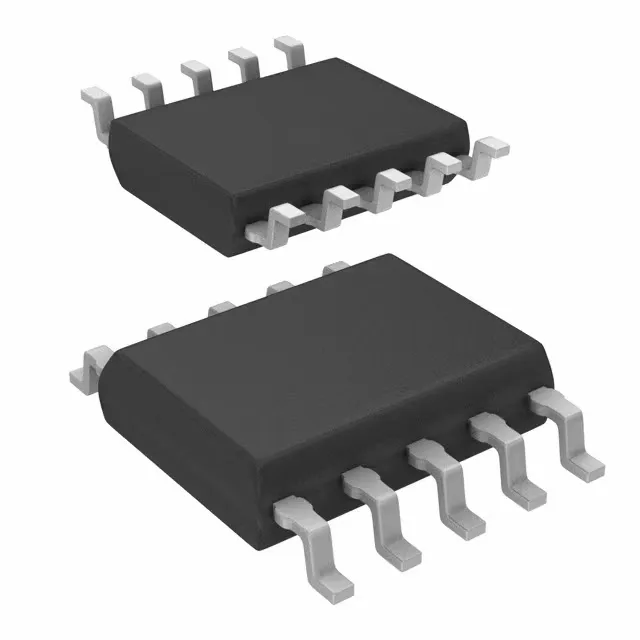
STMicroelectronics L6564D — Analog & Data Acquisition

L6564D STMicroelectronics PFC Controller, Transition Mode

MPNL6564D
End of Life

STMicroelectronics L6564D, Transition-Mode PFC Controller, 10.3V ~ 22.5V supply, 90 µA startup, -25°C ~ 125°C, 10-SOP (0.154", 3.90mm Width) / 10-SSOP package, Surface Mount, Active lifecycle.

$1.1Ref. price · indicative, final on quote
Packaging10-SOP (0.154", 3.90mm Width)
StockContact for availability
MOQ1 pcs
  • 100% new & originalTraceable channels only — no refurbs, no pulls, no remarked parts.
  • Date & lot codes on quoteStated per line before you commit; label photos on request.
  • MSL-compliant ESD packingMoisture-sealed bags with indicator cards; reels photo-verified.
  • PayPal buyer protectionPay by T/T, PayPal or Payoneer — card payments covered end to end.

Specifications

L6564D Technical Specifications
ParameterValue
Mounting typeSurface Mount
Voltage10.3V ~ 22.5V
Current - startup90 µA
Operating temperature-25°C ~ 125°C
ModeDiscontinuous (Transition)
PackageTube
Case10-SOP (0.154\", 3.90mm Width)

Product details

Transition-mode PFC controller for compact power stages

The STMicroelectronics L6564D is a transition-mode (also called critical-conduction-mode) Power Factor Correction controller designed for boost pre-regulators in AC-DC power supplies. It operates in Discontinuous (Transition) mode, which simplifies the control loop and reduces the boost inductor size compared to continuous-conduction designs. The part integrates the control logic, a high-voltage startup circuit, and a totem-pole gate driver on a single die. The supply voltage range of 10.3 V to 22.5 V covers the typical bias rail from an auxiliary winding or a downstream regulator. The 90 µA startup current allows the controller to charge its Vcc capacitor quickly from a high-voltage startup resistor without excessive standby loss. The operating temperature range of -25°C to 125°C covers industrial environments. Packaged in a 10-lead SSOP (body 3.90 mm wide), the L6564D fits tight PCB layouts common in compact power modules and adapter designs. The surface-mount package is suited for automated assembly lines.

Lifecycle and supply position

This makes it suitable for both new design-ins and ongoing production replenishment. The part is ROHS3 compliant. For current pricing and availability, submit an RFQ — our desk confirms stock position and lead time at quote time against your required quantity.

Design-in notes for the boost PFC stage

The L6564D is designed for boost PFC topologies. Transition-mode operation eliminates reverse-recovery losses in the boost diode. The 90 µA startup current allows a high-value startup resistor (typically several hundred kΩ) from the rectified DC bus, minimizing continuous power dissipation in the resistor after the auxiliary winding takes over. The 10.3 V to 22.5 V supply range gives headroom for the Vcc rail to ride through line dips without triggering undervoltage lockout. The -25°C to 125°C junction temperature range covers the thermal extremes in enclosed power supplies.

Frequently asked questions

Is L6564D equivalent to L6562?

The L6564D is a later-generation transition-mode PFC controller from STMicroelectronics. While both parts share the same fundamental operating mode, the L6564D includes enhancements such as a lower startup current (90 µA) and operates over a wider supply range (10.3 V to 22.5 V). Pin compatibility should be verified against the respective datasheets before substitution.

Can L6564D be used in boost PFC?

Yes, the L6564D is specifically designed for boost PFC pre-regulators operating in transition mode. It integrates the control and gate drive for a single-switch boost topology, which is the standard application for this controller family.

What is the operating frequency of L6564D?

The L6564D operates in transition mode, meaning the switching frequency is not fixed but varies with the instantaneous line voltage and load current. The frequency is determined by the boost inductor value, output voltage, and input voltage — typically ranging from a few tens of kHz to a few hundred kHz. The datasheet provides the design equations for inductor selection.