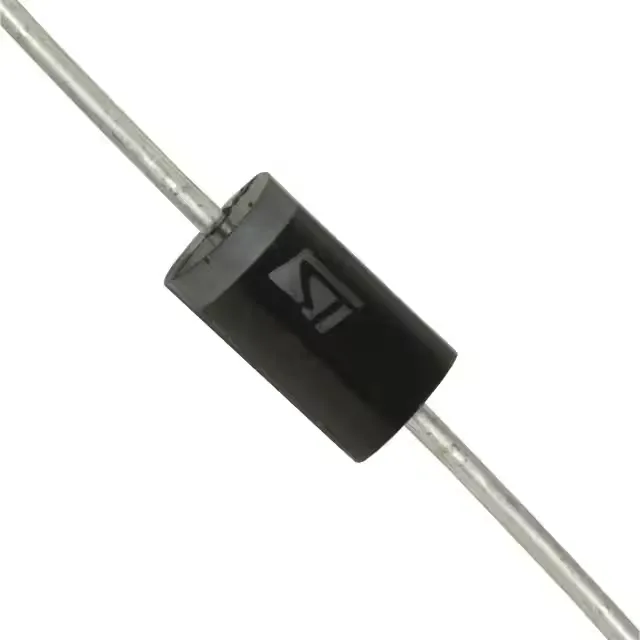
STMicroelectronics 1.5KE400CARL — Circuit Protection

STMicroelectronics 1.5KE400CARL TVS Diode, 380V Breakdown

MPN1.5KE400CARL
Active

STMicroelectronics 1.5KE400CARL, TRANSIL™ series, bidirectional TVS diode, 342V reverse standoff, 380V min breakdown, 706V clamping, 1500W peak pulse power, DO-201AA/DO-27 axial, through hole.

$0.6454Ref. price · indicative, final on quote
Independent supplier — new & surplus stockAuthenticity-screened · ESD-safe packingListing updated Aug 2026

Specifications

1.5KE400CARL specifications
ParameterValue
TypeZener
Series1.5KE, TRANSIL™
MountingThrough Hole
Voltage - breakdown380V
Voltage - clamping (Max) @ ipp706V
Voltage - reverse standoff342V
Current - peak pulse (10/1000μs)14A (8/20µs)
Power - peak pulse1500W (1.5kW)
Power line protectionNo
Capacitance @ frequency195pF @ 1MHz
PackageTape & Reel (TR); Cut Tape (CT)
ApplicationsGeneral Purpose
CaseDO-201AA, DO-27, Axial
Bidirectional channels1

Product details

The STMicroelectronics 1.5KE400CARL is a bidirectional TRANSIL™ TVS diode from the 1.5KE series, designed to clamp transients on AC or DC power rails up to 342V nominal. Its minimum breakdown voltage of 380V and maximum clamping of 706V at the peak pulse current define the protection threshold: the rail must stay below 342V during normal operation, and the clamping voltage sets the upper limit the downstream components must survive. With a single bidirectional channel, it clamps both polarities — useful for AC lines or DC rails where reverse polarity protection is needed.

Through-hole axial — mounting and footprint

The DO-201AA / DO-27 axial package is a through-hole form factor with wire leads, intended for hand insertion or wave solder. The axial body suits point-to-point wiring on terminal strips or perforated boards as well as PCB mounting.

Frequently asked questions

Is 1.5KE400CARL bidirectional?

Yes, it has a single bidirectional channel, meaning it clamps transients of both polarities — suitable for AC power lines or DC rails where reverse voltage events are possible.