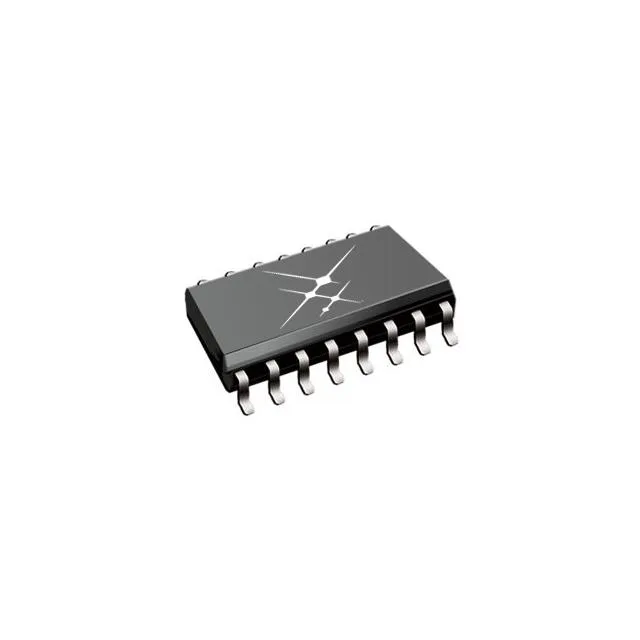
What the 4 A peak output and 150 kV/µs CMTI mean on the bench
The SI8273AB-IS1 is a 2-channel digital isolator from the Si827x family, built with RF coupling technology — it's a gate-driver isolator, not a generic signal isolator. The 4 A peak output current means it can drive the gate capacitance of a medium-power MOSFET or IGBT directly, without an external buffer stage. The 150 kV/µs minimum common-mode transient immunity (CMTI) tells you the output stays clean when the switching node slews at that rate — a motor-drive or inverter half-bridge that sees 1000 V/µs on the high-side reference is still inside the margin. Propagation delay is 60 ns max in either direction, with a pulse-width distortion of 8 ns max. The 10.5 ns typical rise and 13.3 ns fall times keep the switching edges crisp enough for a 100 kHz+ PWM carrier without excessive dead-time penalty.
Supply rails and output drive capability
The output supply range is 4.6 V to 30 V — this covers standard gate-drive rails from 5 V logic-level FETs up to 24 V industrial IGBTs. The high-side source current is 1.8 A, the low-side sink is 4 A, so the part pulls the gate down harder than it pulls up, which is typical for fast turn-off in half-bridge designs where Miller coupling is the concern. The 16-SOIC narrow-body package (3.90 mm width) fits a standard SOIC-16 footprint.
Active lifecycle and compliance paperwork
The tube package is the standard bulk format for manual assembly or small-batch rework. The tape-and-reel sibling SI8273AB-IS1R is the same die and same 8 ns pulse-width distortion spec, just in a different carrier for automated pick-and-place. If your BOM was written for the -IS1R, the -IS1 drops into the same footprint — the difference is only the shipping medium.