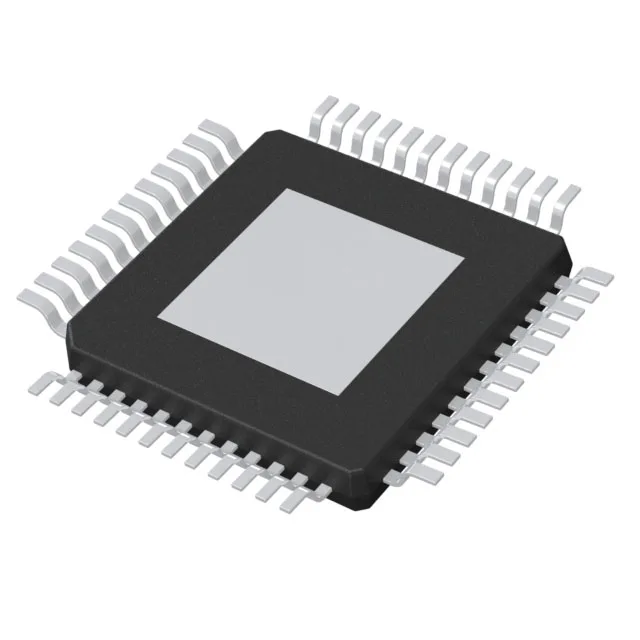
NXP Semiconductors UJA1132HW/FD/3V/0Y — Discrete Semiconductors

NXP UJA1132HW/FD/3V/0Y Automotive PMIC

MPNUJA1132HW/FD/3V/0Y
End of Life

NXP UJA1132HW/FD/3V/0Y, Automotive AEC-Q100, System Basis Chip with Buck/Boost HS-CAN and Dual LIN, 2V-28V supply, 2.8mA supply current, -40°C to 125°C, 48-HTQFP (10x10) exposed pad.

$7.16Ref. price · indicative, final on quote
Packaging48-TQFP Exposed Pad
StockContact for availability
MOQ1 pcs
  • 100% new & originalTraceable channels only — no refurbs, no pulls, no remarked parts.
  • Date & lot codes on quoteStated per line before you commit; label photos on request.
  • MSL-compliant ESD packingMoisture-sealed bags with indicator cards; reels photo-verified.
  • PayPal buyer protectionPay by T/T, PayPal or Payoneer — card payments covered end to end.

Specifications

UJA1132HW/FD/3V/0Y Technical Specifications
ParameterValue
SeriesAutomotive, AEC-Q100
Mounting typeSurface Mount
Voltage2V ~ 28V
Current - supply2.8mA
Operating temperature-40°C ~ 125°C (TA)
PackageTape & Reel (TR); Cut Tape (CT)
ApplicationsAutomotive
Case48-TQFP Exposed Pad

Product details

System basis chip with integrated CAN and LIN for automotive ECUs

The NXP UJA1132HW/FD/3V/0Y is an automotive-grade system basis chip (SBC) that integrates a buck/boost DC-DC converter, a high-speed CAN transceiver, and two LIN transceivers into a single package. It is qualified to AEC-Q100 and operates across the full automotive temperature range of -40°C to 125°C, making it suitable for under-hood and engine-bay electronic control units (ECUs) such as body controllers, gateway modules, and smart actuator interfaces. The supply range spans 2V to 28V, which covers both 12V and 24V automotive electrical systems without external pre-regulation. With a typical supply current of 2.8mA in normal operation, this SBC is designed for always-on modules where quiescent draw must stay low to avoid draining the vehicle battery during ignition-off periods.

2V to 28V supply — 12V and 24V system ready

The wide 2V to 28V input range means this part handles 12V passenger-vehicle electrical systems and 24V truck/bus architectures without a separate pre-regulator. The buck/boost converter maintains a stable output even when the battery voltage dips during cold-crank or rises during load-dump transients within the rated range. For a 24V automotive application, the 28V maximum supply provides enough headroom for nominal 24V operation plus the usual transient peaks. No external clamping or series regulator is required as long as the transient stays under 28V.

Active production, no obsolescence risk for new designs

ROHS3 compliance is confirmed, so the part meets current European and global restriction-of-hazardous-substances requirements without a waiver or exemption.

48-HTQFP exposed pad — thermal and layout considerations

The package with exposed pad requires a thermal land on the PCB to dissipate heat from the integrated buck/boost converter. The exposed pad must be soldered to a copper pour connected to the ground plane; the datasheet's recommended footprint and stencil aperture should be followed to avoid solder voids that degrade thermal performance. Surface-mount assembly is standard for this package class. The exposed pad adds a center-ground connection that also improves EMI by reducing the ground-return inductance of the switching converter.

Frequently asked questions

Is UJA1132HW/FD/3V/0Y suitable for 24V automotive applications?

Yes. The supply range of 2V to 28V covers 24V nominal systems with margin for transients. The integrated buck/boost converter regulates the internal rail regardless of whether the input is 12V or 24V.

Does UJA1132HW/FD/3V/0Y support 5V CAN transceiver logic or only 3.3V?

The order code suffix /3V indicates this variant is configured for a 3.3V supply rail. For a 5V CAN logic variant, the /5V suffix version of the UJA1132 family should be selected.

Is UJA1132HW/FD/3V/0Y compatible with CAN FD?

The description identifies this as a high-speed CAN (HS-CAN) transceiver. Compatibility with CAN FD (flexible data rate) depends on the specific transceiver implementation; the datasheet should be consulted for CAN FD support details, as this is not explicitly stated in the summary record.