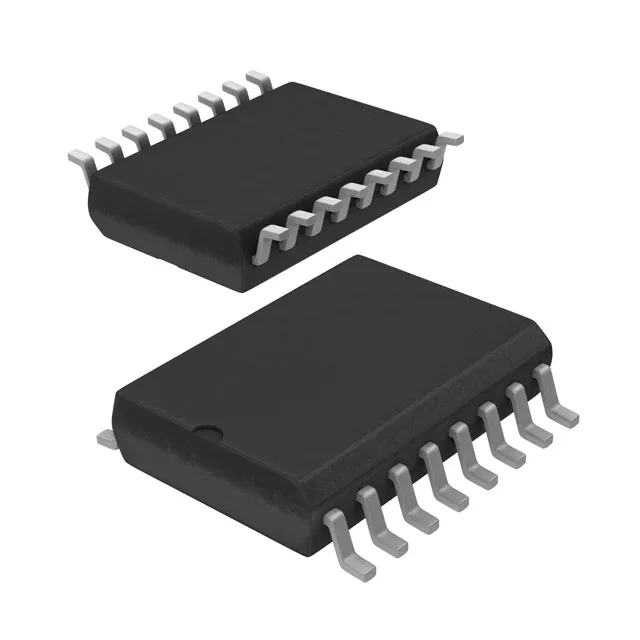
Active I2C RTC with integrated TCXO — what the 1.5 µA timekeeping figure means for battery life
The PCF2129T/2,518: A CR2032 rated 225 mAh delivers roughly 150,000 hours (17 years) of backup at that draw, though self-discharge and the battery's own temperature derating will dominate in practice. The part also integrates a TCXO/crystal, alarm, leap-year tracking, square-wave output, and a watchdog timer — all on-chip, no external oscillator or compensation network needed.
Supply voltage and temperature grade — the operating envelope for the BOM
The battery backup input has the same 1.8 V to 4.2 V range, so the same cell type serves both main and backup roles — no voltage translation between the two. For a data logger in an outdoor cabinet or a telematics unit under the dashboard, the RTC keeps time across the full thermal excursion without a separate temperature-compensated crystal. The 16-SOIC wide-body package (7.50 mm width) is a standard footprint, hand-solderable and rework-friendly, with a 1.27 mm pitch that routes cleanly on two-layer boards.
Timekeeping and interface — what the I2C bus and date/time formats mean for firmware integration
The I2C interface runs at standard (100 kHz) or fast (400 kHz) mode — the RTC shares the bus with sensors, EEPROM, or an MCU without a dedicated RTC pin. Date format is YY-MM-DD-dd; time format is HH:MM:SS with 12/24 hr selection. The firmware driver reads and writes these as BCD registers — no binary-to-decimal conversion in the application layer. The square-wave output can be programmed to 1 Hz, 4.096 kHz, 8.192 kHz, or 32.768 kHz — useful as a calibration tick for an MCU's internal RC oscillator or as a wake-up strobe for a low-power sleep cycle. The watchdog timer resets the system if the I2C host stops refreshing it within a configurable window, which catches firmware hangs in field-deployed equipment.
Compliance and sourcing posture
The PCF2129T/2,518 is ROHS3 compliant — no exemption-based conflict with EU, UKCA, or China RoHS.