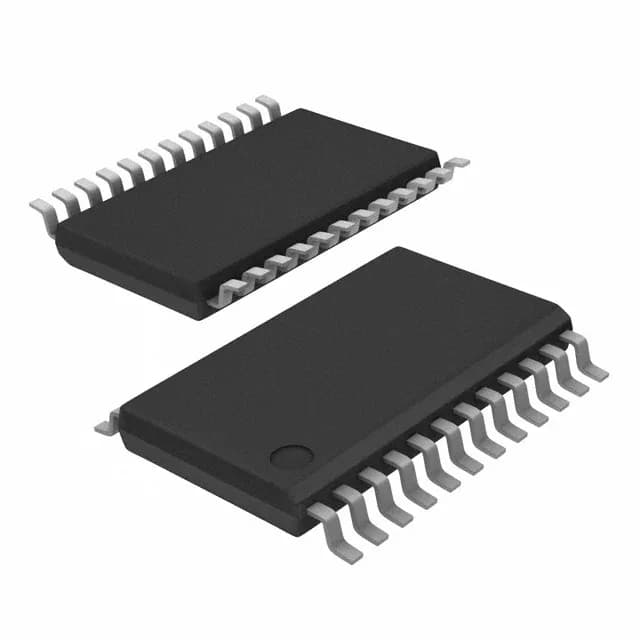
NXP Semiconductors PCAL9555APW,118 — Discrete Semiconductors

PCAL9555APW,118 I²C/SMBus GPIO Expander, 16 I/O, 400 kHz

MPNPCAL9555APW,118
End of Life

NXP PCAL9555APW,118, Agile series, 16-bit I²C/SMBus GPIO expander, 400 kHz, 1.65 V – 5.5 V supply, open-drain/push-pull output, POR, interrupt output, -40°C to 85°C, 24-TSSOP.

$2.21Ref. price · indicative, final on quote
Packaging24-TSSOP (0.173", 4.40mm Width)
StockContact for availability
MOQ1 pcs
  • 100% new & originalTraceable channels only — no refurbs, no pulls, no remarked parts.
  • Date & lot codes on quoteStated per line before you commit; label photos on request.
  • MSL-compliant ESD packingMoisture-sealed bags with indicator cards; reels photo-verified.
  • PayPal buyer protectionPay by T/T, PayPal or Payoneer — card payments covered end to end.

Specifications

PCAL9555APW,118 Technical Specifications
ParameterValue
SeriesAgile
Output typeOpen Drain, Push-Pull
Mounting typeSurface Mount
Voltage1.65V ~ 5.5V
Current - output source (Sink)10mA, 25mA
Frequency400 kHz
InterfaceI²C, SMBus
Operating temperature-40°C ~ 85°C
PackageTape & Reel (TR); Cut Tape (CT)
FeaturesPOR
Number of i (O)16
Case24-TSSOP (0.173\", 4.40mm Width)
Interrupt outputYes

Product details

I/O drive and interrupt – what the numbers mean for the BOM

Each I/O can source 10 mA or sink 25 mA. That sink current is enough to drive a standard LED or a small relay coil directly, saving a transistor per channel. The 400 kHz clock rate is the I²C bus speed — fine for reading switch banks or setting outputs at loop rates up to 25 kHz. If you need faster updates, this part isn't the one; look at a parallel-bus expander instead.

Package and temperature – board fit and environment

Housed in a 24-TSSOP (4.40 mm width), surface-mount only. The -40°C to 85°C range covers industrial enclosures, outdoor telecom cabinets, and HVAC controllers. No AEC-Q100 qualification here — this is the industrial-grade variant, not automotive.

Lifecycle and sourcing – active, no LTB risk

ROHS3 compliant. Active lifecycle status.

Frequently asked questions

Does PCAL9555APW,118 have an interrupt output?

Yes. The INT pin asserts low when any input changes state, allowing the host to read the port only on change instead of polling.

PCAL9555APW,118 vs PCA9555A – what are the differences?

The PCAL9555APW includes a Power-On Reset (POR) feature that the PCA9555A lacks. POR forces all outputs to a defined state at power-up, which matters in safety-critical or fail-safe designs. Otherwise the two are pin-compatible and share the same I²C address map.