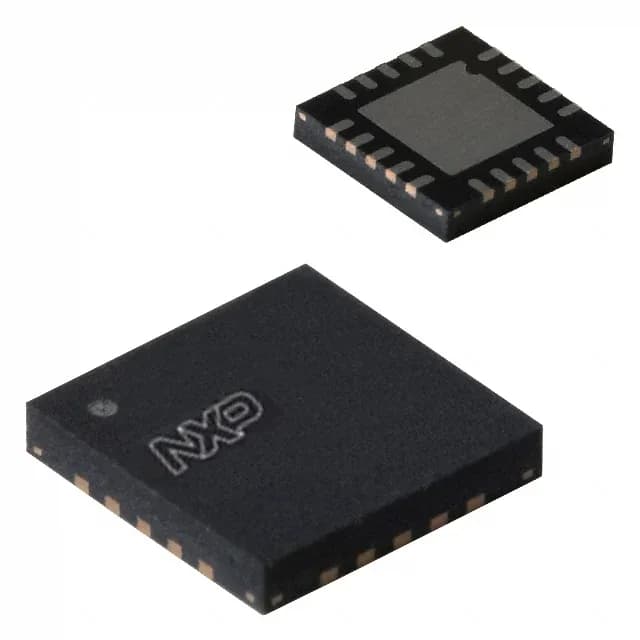
NXP Semiconductors PCA9545ABS,118 — Discrete Semiconductors

NXP PCA9545ABS,118 I²C Switcher, 4-Channel, 20-HVQFN

MPNPCA9545ABS,118
End of Life

NXP PCA9545ABS,118 4-Channel I²C Switcher, Interface I²C, Dual Supply 2.3V~3.6V / 4.5V~5.5V, 20-HVQFN (5x5), Surface Mount, Active, ROHS3.

$2.77Ref. price · indicative, final on quote
Packaging20-VQFN Exposed Pad
StockContact for availability
MOQ1 pcs
  • 100% new & originalTraceable channels only — no refurbs, no pulls, no remarked parts.
  • Date & lot codes on quoteStated per line before you commit; label photos on request.
  • MSL-compliant ESD packingMoisture-sealed bags with indicator cards; reels photo-verified.
  • PayPal buyer protectionPay by T/T, PayPal or Payoneer — card payments covered end to end.

Specifications

PCA9545ABS,118 Technical Specifications
ParameterValue
Mounting typeSurface Mount
Voltage2.3V ~ 3.6V, 4.5V ~ 5.5V
InterfaceI²C
PackageTape & Reel (TR); Cut Tape (CT)
Applications4-Channel I²C Switcher
Case20-VQFN Exposed Pad

Product details

Supply range — why it matters for your BOM

Accepts two distinct supply ranges: 2.3 V to 3.6 V and 4.5 V to 5.5 V. The I²C bus voltage follows the supply pin.

Package and footprint

Housed in a 20-HVQFN (5x5 mm) with an exposed pad. The pad must be soldered to a ground plane for thermal and electrical performance.

Lifecycle and sourcing posture

Listed as Active with ROHS3 compliance. No last-time-buy notice, no NRND flag.

Frequently asked questions

What is the closest pin-compatible alternative to PCA9545ABS,118?

Within the same NXP PCA9545 family, the PCA9545APW (TSSOP-20) and PCA9545AD (SO-20) are functionally identical 4-channel I²C switchers but in different package footprints. The PCA9545ABS,118 uses the 20-HVQFN (5x5) package, so a pin-compatible drop-in would need to share that exact HVQFN footprint — the TSSOP and SOIC variants are not footprint-compatible without a board spin.

What is PCA9545ABS,118 used for?

It is a 4-channel I²C bus switcher. Use it when multiple I²C slaves share the same address and need to be isolated on separate buses — common in multi-sensor arrays, server management controllers, and mixed-voltage I²C systems where the supply voltage sets the bus logic level.