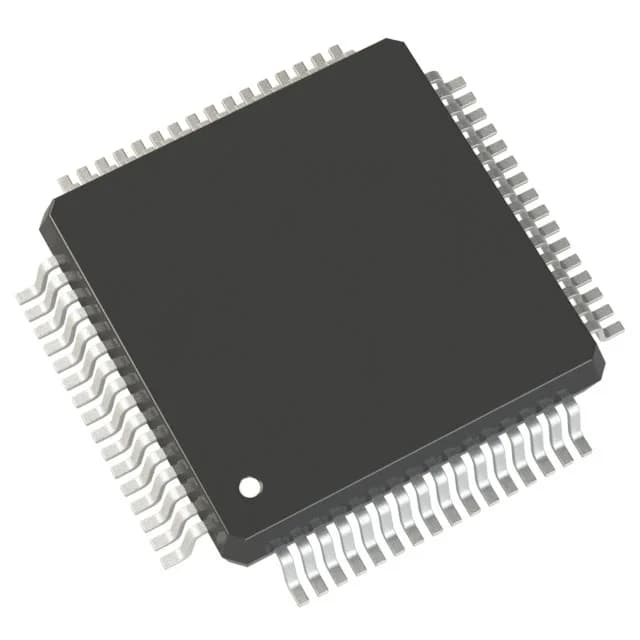
NXP MKL26Z128VLH4 — 32-bit ARM Cortex-M0+ MCU, 48MHz, 128KB Flash, USB OTG
MPNMKL26Z128VLH4
Active
NXP Kinetis KL2 series, 32-bit ARM Cortex-M0+ at 48MHz, 128KB Flash / 16KB SRAM, USB OTG + full peripheral set, 1.71 to 3.6V supply, -40 to 105°C, 64-LQFP tray.
$7.1600Ref. price · indicative, final on quote
Packaging64-LQFP
StockContact for availability
MOQ1 pcs
- 100% new & originalTraceable channels only — no refurbs, no pulls, no remarked parts.
- Date & lot codes on quoteStated per line before you commit; label photos on request.
- MSL-compliant ESD packingMoisture-sealed bags with indicator cards; reels photo-verified.
- PayPal buyer protectionPay by T/T, PayPal or Payoneer — card payments covered end to end.
Specifications
| Parameter | Value |
|---|---|
| Series | Kinetis KL2 |
| Mounting type | Surface Mount |
| Oscillator type | Internal |
| Program memory type | FLASH |
| Voltage - supply (Vcc (Vdd)) | 1.71V ~ 3.6V |
| Operating temperature | -40°C ~ 105°C (TA) |
| Speed | 48MHz |
| Package | Tray |
| RAM size | 16K x 8 |
| Core size | 32-Bit Single-Core |
| Peripherals | Brown-out Detect/Reset, DMA, I²S, LVD, POR, PWM, WDT |
| Connectivity | I²C, LINbus, SPI, UART/USART, USB, USB OTG |
| Number of i (O) | 50 |
| Core processor | ARM® Cortex®-M0+ |
| Case | 64-LQFP |
| Data converters | A/D - 16bit; D/A - 12bit |
| Program memory size | 128KB (128K x 8) |
Frequently asked questions
Can I use the internal oscillator for USB full-speed without an external crystal?
The part carries an internal 48MHz oscillator and lists USB OTG as a core peripheral. The datasheet oscillator accuracy section specifies the tolerance needed for USB full-speed; verify it meets the USB-IF timing window for your target region before removing the crystal.
What supply voltage does the MKL26Z128VLH4 need?
1.71 to 3.6V. This is a 3.3V nominal part with a 1.71V lower floor — not 5V tolerant. Plan a regulator if the board rail is 5V.
What is the temperature rating?
-40 to 105°C ambient (TA). At the upper end of that range, model package thermal resistance against actual I/O and core loading rather than applying a generic derating assumption.