What this i.MX51 processor brings to a control-board BOM
Four USB 2.0 ports are on die, one with an integrated PHY that saves an external transceiver. A single 10/100 Mbps Ethernet MAC covers wired connectivity without an add-on controller. Memory interface supports both LPDDR and DDR2, giving the board designer flexibility to pick the cheaper or more available DRAM generation at build time.
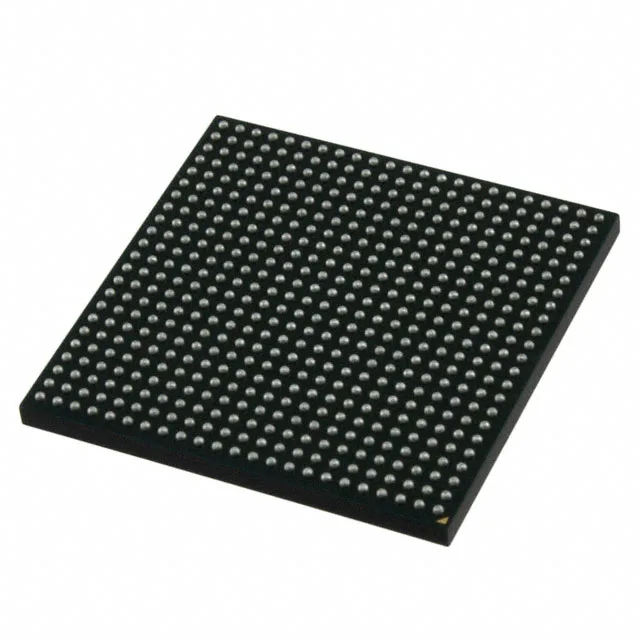
The Cortex-A8 core at 800 MHz, with a NEON SIMD coprocessor, handles display updates, Modbus TCP polling, and data logging. The part lacks a dedicated graphics accelerator, so the LCD controller and NEON share the pixel-pushing load. The 529-ball BGA (19×19 mm) routes on a four-layer board with careful DDR2 trace-length matching. The I/O voltage rails span 1.2 V, 1.875 V, 2.775 V, and 3.0 V — the 1.2 V rail powers the core, the 3.0 V rail handles the general-purpose I/O bank. A dedicated 1.875 V or 2.775 V rail feeds the DDR2 or LPDDR interface respectively.
Security features for a connected design
The MCIMX512DJM8C integrates ARM TrustZone, a secure boot fuse box, secure JTAG, and cryptographic acceleration. For a gateway that must authenticate firmware updates or protect encryption keys at rest, these blocks avoid a separate secure element on the BOM.
Operating temperature and environment
The TC (case temperature) rating means the package itself can reach 85°C; ambient air around the board will be lower by the thermal resistance of the BGA-to-heatsink path.
NXP lists the MCIMX512DJM8C as Active and RoHS3 compliant.