What this 16-bit MCU brings to the BOM
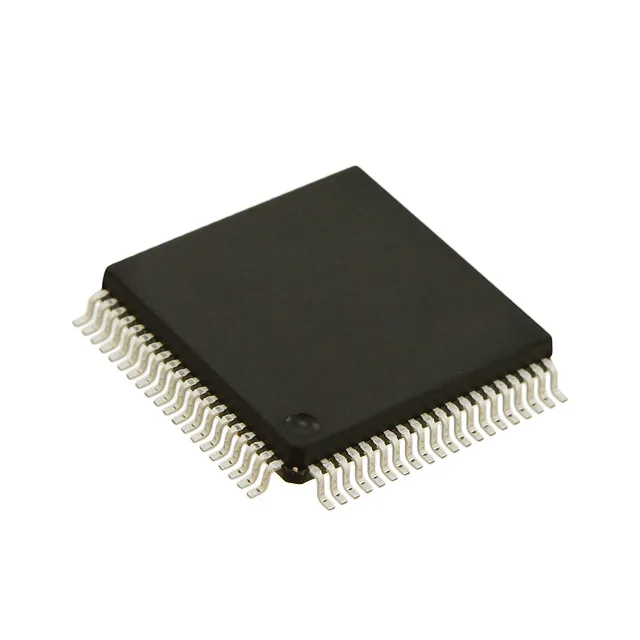
The NXP MC9S12XET256MAA is a 16-bit HCS12X microcontroller in an 80-QFP package, rated for 50 MHz operation. It carries 256 KB of Flash program memory, 16K x 8 RAM, and 4K x 8 EEPROM — enough code and data space for automotive body controllers, industrial CAN gateways, and motor-drive logic that must run without external memory. Supply voltage spans 1.72 V to 5.5 V.
Peripherals and connectivity — what is on-chip
On-chip peripherals include LVD (low-voltage detect), POR (power-on reset), PWM, and WDT — the usual watchdog and supervision blocks for safety-critical designs. The connectivity set covers CANbus, EBI/EMI, I²C, IrDA, SCI, and SPI, so this MCU can talk to a CAN transceiver, an external memory chip, a serial LCD, or an IrDA transceiver without extra UARTs or bit-banging. A 12-channel, 12-bit ADC is integrated, which handles analog inputs like throttle position, temperature sensors, or current shunts without an external converter.
I/O and package — board-fit details
59 general-purpose I/O lines are available on the 80-QFP (14x14 mm body). The QFP footprint is hand-solderable and rework-friendly, which matters for prototype runs and field repairs where a BGA would be impractical. An external oscillator is required; no internal RC clock is used for the core timing, so the board design must allocate space for a crystal or ceramic resonator.