Single-core Cortex-A53 at 800 MHz — the edge-node compute tier
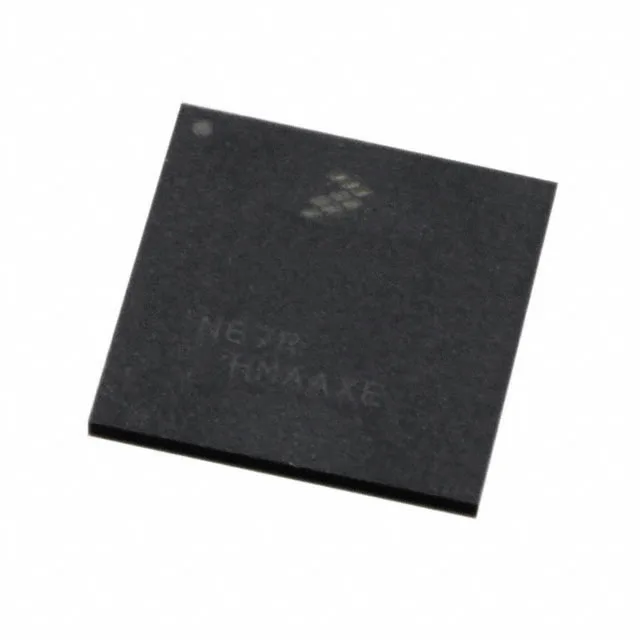
The NXP LS1012ASE7HKA is a single-core 64-bit ARM Cortex-A53 microprocessor from the QorIQ Layerscape family, clocked at 800 MHz. It targets the power-constrained edge of the network — think industrial gateways, IoT aggregators, and network-attached storage appliances where you need a 64-bit Linux-capable CPU without the thermal budget of a multi-core part. The single core keeps the BOM simple: one DDR3L memory interface, no complex power sequencing for multiple core domains, and a thermal profile that stays cool in a 211-FCLGA package measuring 9.6x9.6 mm.
Integrated I/O — USB 3.0, SATA 6Gbps, dual GbE
This part packs a USB 3.0 port with integrated PHY, a SATA 6 Gbps channel, and two Gigabit Ethernet MACs. For a design that needs to bridge a local storage drive to a network port, that is a single-chip solution — no external USB-to-SATA bridge or separate Ethernet controller. The USB 2.0 port handles legacy peripherals or console access. The SATA interface supports direct-attached storage for edge caching or surveillance recording, while the dual GbE ports enable a simple two-port router or firewall appliance. The integrated PHY on USB 3.0 saves board area and reduces the component count on the BOM.
0°C to 105°C — industrial, not automotive
It does not cover the -40°C cold-start that automotive under-hood or remote outdoor deployments require. If your application lives in a heated cabinet or a climate-controlled room, this grade is fine. For a pole-mounted gateway in northern winters, you need the extended-temperature variant in this family.
Package and mounting — 211-FCLGA, surface-mount
The LS1012ASE7HKA comes in a 211-ball FCLGA package (9.6x9.6 mm body), surface-mount only. The LGA land pattern requires a solder-paste stencil and reflow — no socket option for prototyping. The small footprint leaves room for the DDR3L memory and the Ethernet magnetics on a compact four-layer board. The thermal pad on the underside of the package needs a via array to the ground plane for heat spreading; without it, the junction temperature climbs quickly above 85°C ambient.
Security features — Secure Boot and TrustZone
The LS1012ASE7HKA includes Secure Boot and ARM TrustZone technology. Secure Boot validates the bootloader against a stored key before the core releases reset, preventing unauthorized firmware from running. TrustZone partitions the Cortex-A53 into a secure world and a normal world, useful for isolating cryptographic operations, DRM key storage, or secure payment processing from the main Linux stack. For an IoT gateway that must authenticate to a cloud service, these features satisfy the secure-boot requirement without a separate TPM chip.