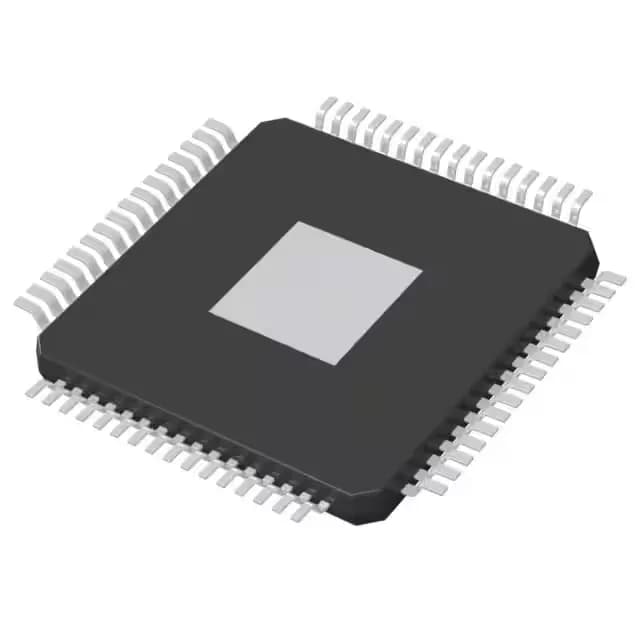
NXP LPC552x series, ARM Cortex-M33 single-core at 150MHz, 256KB Flash, 144KB RAM, 36 I/O, USB OTG, Flexcomm (I²C/SPI/UART), 10-channel 16-bit ADC, 1.8–3.6 V supply, -40 to 105°C operating temperature, 64-HTQFP (10×10) exposed-pad package, ROHS3 Compliant.
- 100% new & originalTraceable channels only — no refurbs, no pulls, no remarked parts.
- Date & lot codes on quoteStated per line before you commit; label photos on request.
- MSL-compliant ESD packingMoisture-sealed bags with indicator cards; reels photo-verified.
- PayPal buyer protectionPay by T/T, PayPal or Payoneer — card payments covered end to end.
Specifications
| Parameter | Value |
|---|---|
| Series | LPC552x |
| Mounting type | Surface Mount |
| Oscillator type | Internal |
| Program memory type | FLASH |
| Voltage - supply (Vcc (Vdd)) | 1.8V ~ 3.6V |
| Operating temperature | -40°C~105°C(TA) |
| Speed | 150MHz |
| Package | Tray |
| RAM size | 144K x 8 |
| Core size | 32-Bit Single-Core |
| Peripherals | Brown-out Detect/Reset, DMA, I²S, POR, PWM, WDT |
| Connectivity | Flexcomm, I²C, MMC/SD/SDIO, SPI, UART/USART, USB |
| Number of i (O) | 36 |
| Core processor | ARM® Cortex®-M33 |
| Case | 64-TQFP Exposed Pad |
| Data converters | A/D 10x16b |
| Program memory size | 256KB (256K x 8) |
Frequently asked questions
Is the LPC5526JBD64K a drop-in replacement for the base LPC5526, or does the exposed pad require re-layout?
The 64-HTQFP exposed pad is the gating difference. It requires a thermal land with properly implemented vias under the package — not a simple socket swap from a non-pad QFP64. The pinout on the 36 GPIO is consistent with the LPC5526 base product number, but the mechanical thermal attachment must be designed in. Re-layout is required for the thermal pad; pin-function compatibility with the base LPC5526 is preserved otherwise.
What is the lifecycle status of the LPC5526JBD64K — is it active or in end-of-life?
confirms Active status with ROHS3 Compliant designation. No last-time-buy or formal PCN is indicated in the current ledger. The NXP LPC552x series is in mainstream production, which typically carries multi-year continuity commitments through authorized distribution — qualify the alternate and set a BOM-watch cadence for any PCN notifications before committing a multi-year production run.
With 36 GPIO and 10 ADC channels, how much routing flexibility remains for Flexcomm peripherals in a multi-sensor PLC card?
The 36 I/O is shared between six Flexcomm channels (I²C/SPI/UART selectable) and the 10-channel 16-bit ADC. Because Flexcomm channels and ADC inputs both mux onto the same GPIO pins, the pin-assignment table must be resolved at schematic — the ADC channels consume a portion of the available pins that would otherwise route to UART or SPI. A conservative approach is to reserve two or three Flexcomm channels for the fieldbus interface and plan the ADC mux budget against the remaining pin count before routing is locked.
What are the thermal-via requirements for the 64-HTQFP exposed pad in a panel-mount I/O module at full ambient?
The exposed pad under the 64-HTQFP must connect to a thermal land on the PCB with a via array sized to keep the junction below 125 °C at 105 °C ambient — this is the boundary set by the operating temperature and the standard Tj(max) for this class of MCU. Specific via count and pad metallization are determined by the PCB stackup and copper weight; the 64-HTQFP (10×10) body gives the mechanical footprint for thermal planning. The datasheet thermal resistance figure (not listed in this ledger) governs the exact calculation — plan the pad area conservatively if the panel module lacks active cooli