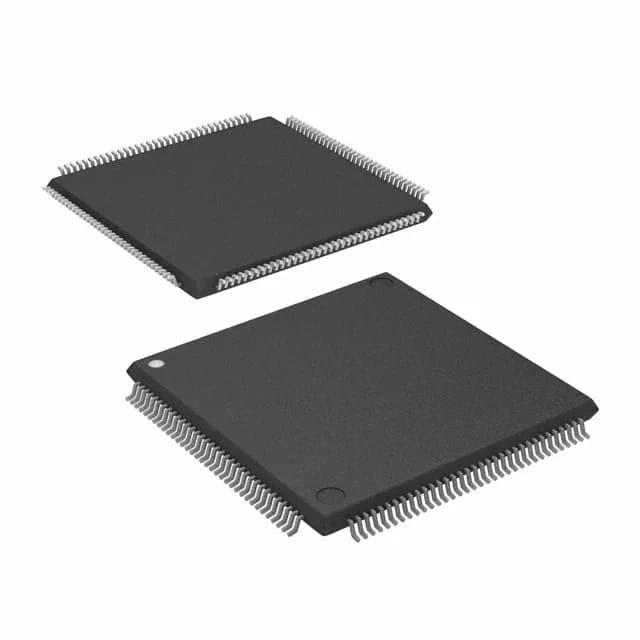
NXP LPC1788FBD144,551 — 120MHz ARM Cortex-M3 MCU, 512KB Flash, 96KB SRAM, 144-LQ
NXP LPC17xx series ARM Cortex-M3 MCU, LPC1788FBD144,551, 120MHz, 512KB Flash, 96KB SRAM, 109 I/O, Ethernet/USB OTG/CAN, 8x12b ADC, 1x10b DAC, 2.4–3.6V, -40°C to 85°C, 144-LQFP (20×20mm) Tray.
- 100% new & originalTraceable channels only — no refurbs, no pulls, no remarked parts.
- Date & lot codes on quoteStated per line before you commit; label photos on request.
- MSL-compliant ESD packingMoisture-sealed bags with indicator cards; reels photo-verified.
- PayPal buyer protectionPay by T/T, PayPal or Payoneer — card payments covered end to end.
Specifications
| Parameter | Value |
|---|---|
| Series | LPC17xx |
| Mounting type | Surface Mount |
| Oscillator type | Internal |
| Program memory type | FLASH |
| Voltage - supply (Vcc (Vdd)) | 2.4V ~ 3.6V |
| Operating temperature | -40°C ~ 85°C (TA) |
| Speed | 120MHz |
| Package | Tray |
| RAM size | 96K x 8 |
| Core size | 32-Bit Single-Core |
| EEPROM size | 4K x 8 |
| Peripherals | Brown-out Detect/Reset, DMA, I²S, LCD, Motor Control PWM, POR, PWM, WDT |
| Connectivity | CANbus, EBI/EMI, Ethernet, I²C, Microwire, Memory Card, SPI, SSI, SSP, UART/USART, USB OTG |
| Number of i (O) | 109 |
| Core processor | ARM® Cortex®-M3 |
| Case | 144-LQFP |
| Data converters | A/D 8x12b; D/A 1x10b |
| Program memory size | 512KB (512K x 8) |
Frequently asked questions
How does the LPC1788FBD144,551 compare to the LPC1778 for a Profinet I/O module design?
The LPC1788 runs at 120MHz with 512KB Flash and 96KB SRAM versus the LPC1778's lower SRAM and Flash complement. Both are Cortex-M3 cores, so firmware migrating between them does not require core flag changes in Keil MDK — the delta is memory headroom and clock speed. If your Profinet stack plus application firmware fits within the LPC1778's memory budget and you do not need the extra SRAM for Ethernet protocol stack buffers, the cost delta on a 20-unit build may not be justified.
Can the internal oscillator drive the USB OTG full-speed clock on the LPC1788FBD144,551?
USB full-speed requires a 48MHz clock within ±0.25% tolerance. The internal RC oscillator on the LPC1788 has wider tolerance than that — an external crystal or external clock source is required for reliable USB OTG operation. The 120MHz PLL can derive the core clock from a 12MHz crystal with appropriate dividers; the USB clock is derived separately and should be sourced from a precise reference.
Does the -40°C to 85°C rating require derating at the upper industrial ambient end?
The -40°C to 85°C rating covers the standard industrial ambient range for panel and DIN-rail equipment. Continuous current draw on the 3.3V rail at 120MHz with all peripherals active is a thermal design question governed by package thermal resistance and board layout — the spec table does not include absolute maximum current draw figures. Thermal characterization on the 144-LQFP (20×20mm) at full peripheral load is typically a board-level design verification, not a spec-sheet guarantee.