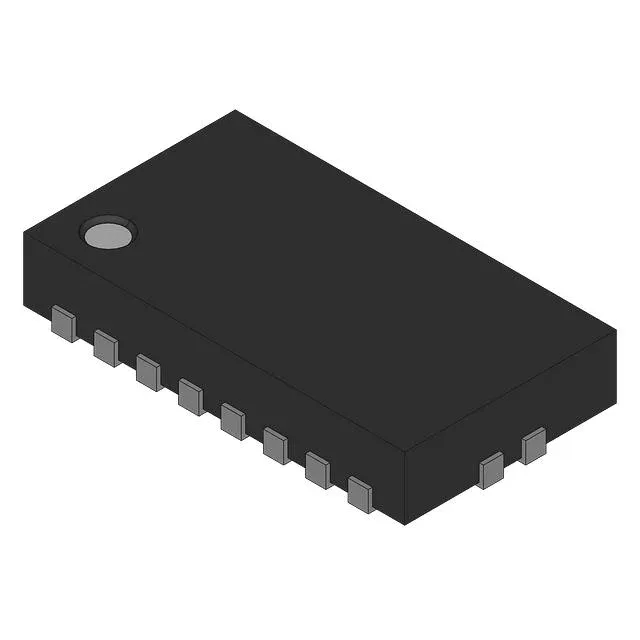
Automotive-grade octal buffer for 5V buses
The Nexperia 74HCT244BQ-Q100 is an automotive-qualified (AEC-Q100) octal non-inverting buffer with 3-state outputs, designed for 5V nominal supply rails in the 4.5V to 5.5V range. It packs two banks of four buffers each, delivering 6mA source and 6mA sink per output — enough to drive moderate capacitive loads on a CAN transceiver enable, sensor clock line, or address/data bus without an extra line driver.
What the 6mA drive and 3-state outputs mean for your BOM
At 6mA per channel, this buffer isn't a power-stage part — it's sized for logic-level fan-out to CMOS inputs, clock distribution, or bus isolation where the 3-state outputs let multiple peripherals share a common line without contention. The 3-state control (active-low output enable per 4-bit bank) is the feature that makes it a bus buffer rather than just a line driver: pull the enable high and the outputs go high-impedance, so the bus floats clean for another device to drive. If your rail droops during cold-crank, the buffer still holds state down to 4.5V.
Package and reflow: the DHVQFN exposed pad
The 20-DHVQFN (4.5x2.5mm) is a fine-pitch QFN with an exposed center pad. The 0.5mm pitch calls for a stencil aperture that doesn't bridge — a 1:1 pad-to-aperture ratio with a 0.1mm step-down on the center pad works. Check the coplanarity on incoming inspection; a slightly domed QFN can tombstone on one corner if the paste volume is uneven.
The -Q100 suffix is the automotive variant — the standard 74HCT244 in a different package won't carry the AEC-Q100 certification, so if your customer or quality system requires automotive-grade parts, this is the one to use.