109 MHz count rate — where the ripple chain limits throughput
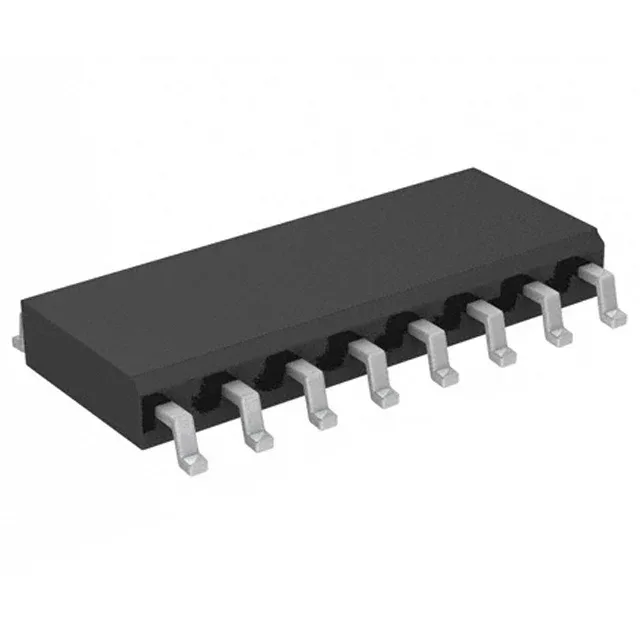
The 74HC4020D,652 is a 14-stage binary ripple counter from NXP's 74HC family, packaged in a 16-SOIC with 3.90 mm body width. It counts up on the negative edge of the clock input, with each of the 14 stages dividing the input frequency by a factor of two — the final output toggles at the clock divided by 16384. The 109 MHz count rate is specified at the clock input, but the ripple architecture means each successive stage adds propagation delay. The effective toggle rate at the later outputs (Q10 through Q14) is limited by the cumulative gate delay through the chain — at 109 MHz input, the first few stages toggle reliably, but the final output's rise time may not meet the input threshold of a downstream device running at the same clock rate.
Supply voltage range and temperature grade — design margin for mixed-voltage and harsh environments
The CMOS process draws near-zero static current across the band — the thermal budget is dominated by dynamic switching losses, which scale with frequency and load capacitance. At 109 MHz into a 15 pF load, the dynamic current at 5 V is roughly 8 mA per MHz, so the total supply current at full speed can reach several hundred milliamps. The asynchronous reset (active-high) clears all 14 counter stages independently of the clock edge — useful in power-sequenced or glitch-prone designs where a synchronous reset might miss the window. The reset input has a Schmitt-trigger action per the 74HC family standard, providing noise immunity on the reset line.
Package and board-fit note — 16-SOIC footprint and thermal considerations
The 16-SOIC package (0.154-inch body width, 3.90 mm) uses the standard SOIC-16 footprint with 1.27 mm pin pitch — hand-solderable and compatible with common SOIC test clips and programming adapters. No exposed thermal pad on this package — heat dissipation is through the leadframe and PCB copper. For high-speed operation near 109 MHz, a 4-layer board with a ground plane under the package helps keep the die temperature within the 125°C limit.
ROHS3 compliant with no exemptions for lead in solder or other restricted substances — the part ships with full RoHS documentation for EU and UKCA regulatory filings.