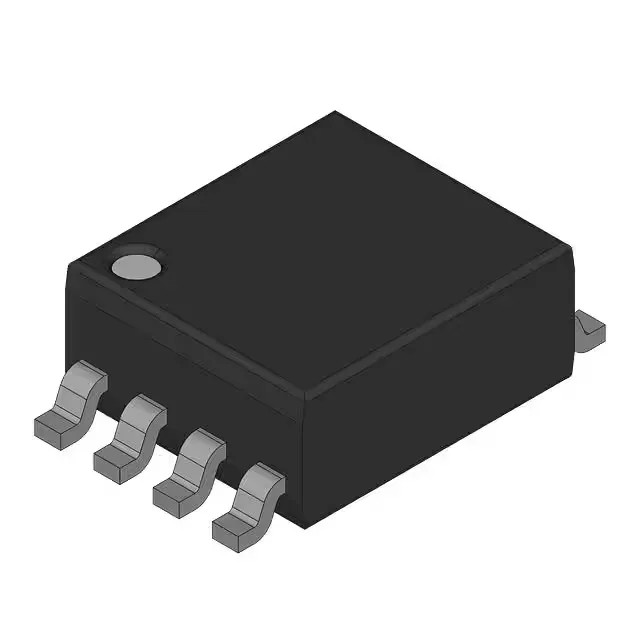
The 500 Mbps data rate is the headline number that tells you this translator can keep up with fast serial buses without adding jitter or timing skew. If you are translating a 100 MHz SPI clock or a 400 kbps I2C line, the margin is generous — the real limit is the propagation delay through the pass-gate architecture, which stays well under 2 ns typical. That flexibility saves board space and BOM line items.
Two bidirectional channels, one tiny package
The 74AVC2T45DC-Q100125 packs two bidirectional channels into an 8-VFSOP package (2.30 mm width), which is about the footprint of a single SOT-23. Each channel has its own direction-control pin (DIR), so you can independently set the data flow on each bit — useful when one signal is input and the other is output on the same bus. The bidirectional nature means you do not need separate TX and RX lines; one translator handles both directions on a shared trace.
The AEC-Q100 qualification is the reason this part carries the -Q100 suffix.
That said, the 74AVC series is a mature logic family, so it is worth checking the PCN history for any package or wafer-fab changes — but as of now, the supply channel is stable through standard distribution.