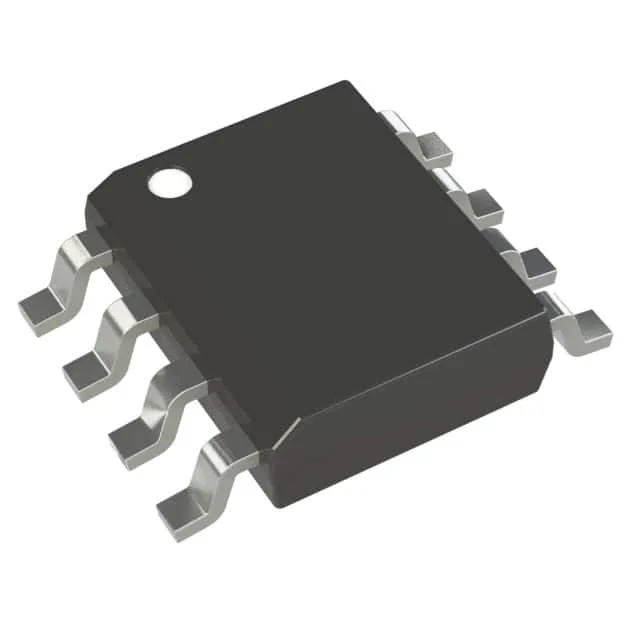
4 Mbit SPI flash for firmware and parameter storage
It clocks up to 30 MHz over the SPI bus, which gives a sustained read throughput around 3.6 MB/s in Fast Read mode — enough for code shadowing or configuration data logging in an embedded system. The 8-SOIC footprint is the industry-standard serial flash package, pin-compatible with a wide range of SPI NOR flash parts from 512 Kbit to 16 Mbit, so it fits existing board layouts without a respin.
The write cycle time is 5 ms per page, which is typical for SPI NOR flash — budget that latency when the firmware update routine is called.
Density comparison — 4 Mbit vs the 1 Mbit SST25VF010A
The closest functional peer in the serial flash space is the SST25VF010A-33-4I-SAE-T, which shares the same SPI interface, 8-SOIC package, and 2.7 V supply floor. The deciding difference is density: the USBF129T-I/SN holds 4 Mbit (512K x 8) versus the SST25VF010A's 1 Mbit (128K x 8). If the firmware image or parameter table has grown past 128 KB, the 4 Mbit part is the natural upgrade without changing footprint or pinout. The SST25VF010A writes a page in 20 µs versus the USBF129T-I/SN's 5 ms — the SST is faster per-page, but the USBF129T-I/SN offers four times the storage. For a design that needs the extra headroom, the page-write speed difference is secondary to fitting the full code image.