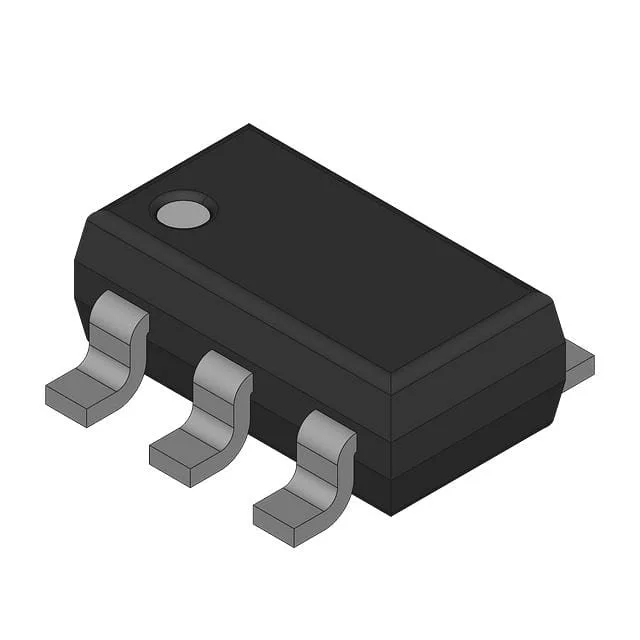
What this 4 MHz buck regulator brings to a power rail
The 600 mA current rating sets the load budget: it comfortably powers a single MCU core, a small FPGA rail, or a sensor chain, but you will need to derate if the ambient temperature pushes junction temperature toward the 125 °C ceiling. The 4 MHz switching frequency is the key enabler for small passives — a 1 µH inductor and 4.7 µF output capacitor are typical, keeping the total power-stage area under 20 mm². That matters when board real estate is the constraint, not absolute efficiency at light load.
The 125 °C junction ceiling gives headroom for self-heating at full load; a thermal analysis should confirm the derating curve for continuous 600 mA at high ambient.
It is ROHS3 compliant.