What the 27696 logic elements buy you
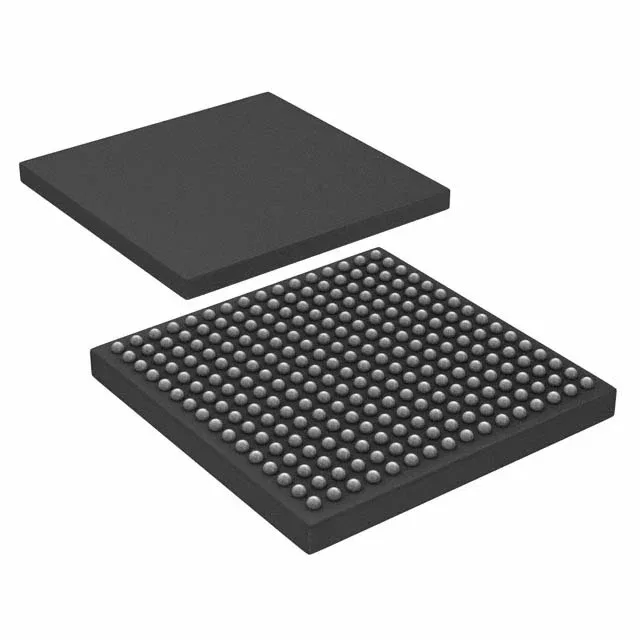
The Microchip M2GL025-VFG256 is an IGLOO2 FPGA with 27696 logic elements and 1130496 bits of embedded RAM, packaged in a 256-LFBGA (14x14 mm FPBGA). That logic count sits in the mid-range of the IGLOO2 family — enough to absorb a 32-bit soft-core processor, some DSP datapath, and a handful of peripheral controllers without needing a larger die. The 138 I/O give you room to bring out a parallel bus, multiple SPI/UART interfaces, and still have pins left for board-level control signals. Supply voltage spans 1.14 V to 2.625 V, which means this part can live on a 1.2 V core rail or a 2.5 V auxiliary rail without an extra regulator — useful when you're trying to simplify the power tree on a mixed-voltage board.
Package reality — 256-ball BGA on a 14x14 mm footprint
The 256-LFBGA (fine-pitch BGA) with a 14x14 mm body is a hand-placeable package for a rework station, but the 0.8 mm ball pitch means you need a decent microscope and a profile that doesn't soak the part past 260 °C peak. The supplier device package is 256-FPBGA (14x14) — same footprint, same ball map. Surface-mount only, no socket option. If you're doing a prototype run, budget for a stencil and a pre-bake if the tray has been open past the MSL floor life. The 138 I/O are distributed around the perimeter balls, not a depopulated center — so fanout via microvias is straightforward on a 4-layer board.
That's commercial/industrial floor — fine for benchtop instruments, telecom indoor equipment, and most factory automation cabinets that aren't sitting next to an oven. Not rated for under-hood automotive or outdoor pole-mount enclosures without active cooling. If your design lives in a conditioned space, this grade is exactly what you want; if the ambient hits 90 °C, you'll need the industrial-temperature variant (the M2GL025-FCSG325I sibling, which runs -40 °C to 100 °C).
No last-time-buy notice, no end-of-life warning. The ROHS3 compliance means it ships fully lead-free — no exemption for tin-lead finish, so verify your reflow profile handles pure tin balls.