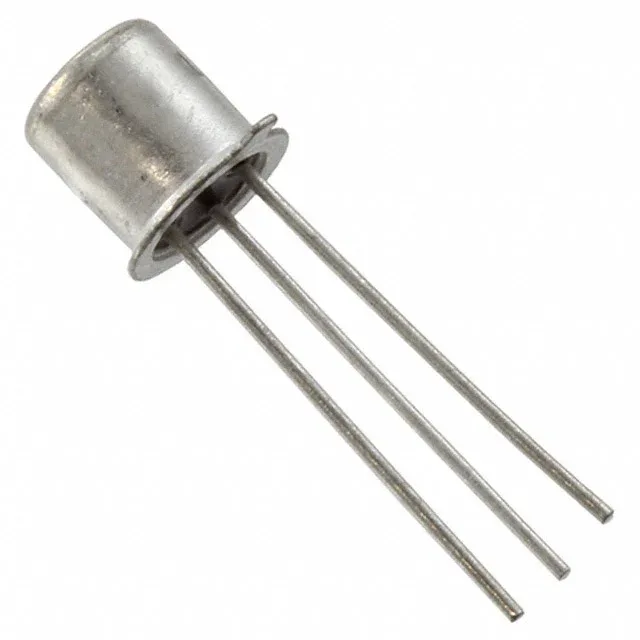
Military-grade PNP switching transistor in a TO-18 can
The JANTX2N2907A is a PNP silicon switching transistor qualified to MIL-PRF-19500/291, the military specification for small-signal transistors. It comes in a hermetically sealed TO-206AA (TO-18) metal can with through-hole leads, rated for junction temperatures from -65°C to 200°C.
60 V Vce, 600 mA Ic — derating for the BOM
The 60 V Vce breakdown sets the maximum rail voltage the transistor can withstand; for a 28 V military bus or a 48 V telecom rail, derate to 80% (48 V) for reliable operation. The 600 mA collector current limit means the part can switch relays, drive small solenoids, or buffer logic-level signals, but for continuous currents above 400 mA the 500 mW power dissipation limit becomes the binding constraint — check the junction temperature rise against the TO-18 thermal resistance, especially in still air. The 1.6 V Vce saturation at 50 mA base current and 500 mA collector current is typical for a 600 mA-rated PNP — budget for the drop when calculating load voltage in low-side switching configurations.
It is RoHS non-compliant by design — the tin-lead finish on the TO-18 leads is required for tin-whisker mitigation in high-reliability programs.