±1°C typical accuracy — where it earns its place on the BOM
The AT30TSE004A-MA5M-T is a digital local temperature sensor from Microchip, communicating over I²C with a 10-bit resolution. Its ±1°C typical accuracy (±3°C over the full range) suits board-level thermal monitoring. The sensor covers -20°C to 125°C, which spans the industrial and automotive cabin range. Below -20°C the accuracy is not specified — if your cold-start requirement dips below that, this part won't give you a reliable reading.
Shutdown and standby — saving power between reads
The part includes a shutdown mode and a standby mode, letting the system power down the sensor between temperature conversions. For a battery-powered IoT node that reads temperature once a minute, these modes cut the average current draw significantly — the I²C bus can be idle and the sensor sleeping until the host wakes it for a measurement. An output switch and programmable limit register are also on board. The limit can be set to trigger an alert when the temperature crosses a threshold, offloading the host from polling the I²C bus continuously.
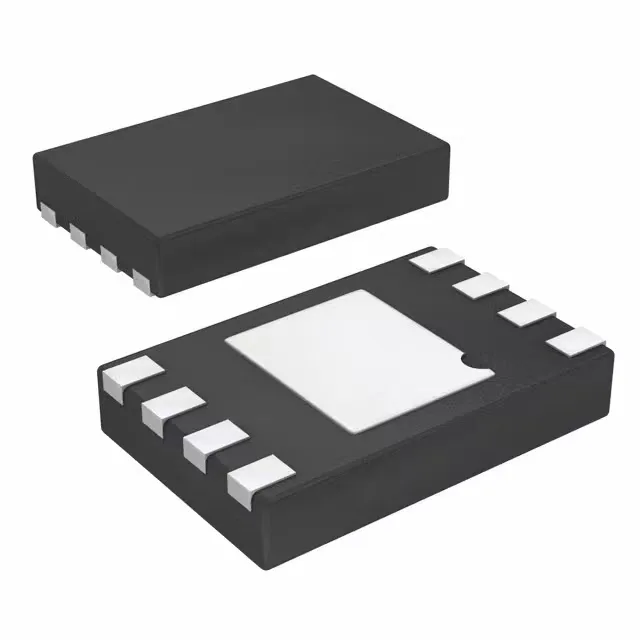
8-UDFN (2x3) — small footprint, exposed pad rework
Under a hot-air station, the small thermal mass means the part reaches reflow temperature quickly; just watch the pad alignment — the package is symmetric and the pin-1 mark is a small dot that can be hard to see under flux residue. The I²C bus voltage must match the supply or use a level shifter if the host runs at a different logic level.
ROHS3 compliance is confirmed. No AEC-Q qualification is listed, so if the target is an automotive under-hood application, verify the qualification separately — the -20°C to 125°C range alone does not guarantee automotive-grade reliability testing.