Microchip Technology 24LC01B-I/P — Sensors & Transducers

24LC01B-I/P EEPROM 1Kbit I2C 400kHz 8-DIP Tube - Microchip

MPN24LC01B-I/P
End of Life

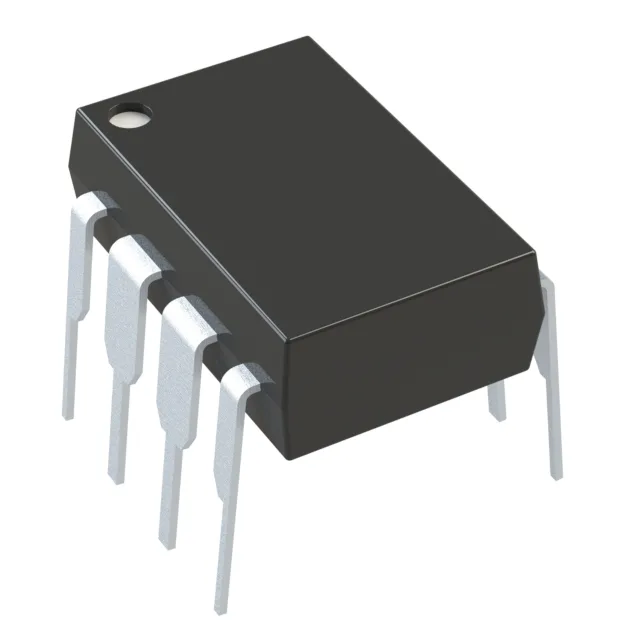
Microchip Technology 24LC01B-I/P, 1Kbit Serial EEPROM, I2C interface, 400 kHz clock, 2.5V to 5.5V supply, -40°C to 85°C industrial temp, 8-DIP through-hole package, Tube.

$0.37Ref. price · indicative, final on quote
Packaging8-DIP (0.300", 7.62mm)
StockContact for availability
MOQ1 pcs
  • 100% new & originalTraceable channels only — no refurbs, no pulls, no remarked parts.
  • Date & lot codes on quoteStated per line before you commit; label photos on request.
  • MSL-compliant ESD packingMoisture-sealed bags with indicator cards; reels photo-verified.
  • PayPal buyer protectionPay by T/T, PayPal or Payoneer — card payments covered end to end.

Specifications

24LC01B-I/P Technical Specifications
ParameterValue
Memory typeNon-Volatile
Mounting typeThrough Hole
Voltage2.5V ~ 5.5V
Frequency400 kHz
Memory interfaceI2C
Operating temperature-40°C ~ 85°C (TA)
PackageTube
TechnologyEEPROM
Access time3.5 µs
Memory size1Kbit
Memory formatEEPROM
Case8-DIP (0.300\", 7.62mm)
Memory organization128 x 8
Write cycle time - word, page5ms

Product details

1Kbit I2C EEPROM in an 8-pin DIP — the hand-solderable non-volatile store

The 24LC01B-I/P is a 1Kbit serial EEPROM organized as 128 x 8 bits, communicating over an I2C bus at up to 400 kHz. The through-hole 8-DIP package (0.300-inch row spacing) is the right choice when you need to socket the memory for firmware prototyping, field upgrades, or low-volume production where a reflow oven isn't on the line. Supply voltage spans 2.5V to 5.5V, so it sits comfortably on a 3.3V or 5V rail without a regulator. The industrial temperature range (-40°C to 85°C) qualifies it for outdoor telecom cabinets, automotive cabin modules, and factory-floor sensor nodes.

400 kHz I2C bus and 5 ms write cycle — timing budget realities

At 400 kHz the I2C bus delivers a byte-read time around 26 µs (including addressing overhead), but the write cycle — word or page — takes 5 ms. That 5 ms is the blocking period: the bus is held while the EEPROM writes internally. For applications that log data at high rates, the write-cycle time limits throughput to roughly 200 bytes per second per page. Plan your write buffer and polling strategy around that ceiling. Access time is 3.5 µs — the time from the last SCL falling edge to data valid on SDA. That's well within the I2C spec for 400 kHz (minimum SCL low period 1.3 µs), so no timing margin issue on a standard bus.

Active production — no last-time-buy pressure

Microchip lists the 24LC01B-I/P as Active. The ROHS3 compliance covers current EU and UK RoHS exemptions.

Package and supply — what the 8-DIP means for your board

The 8-DIP package (8-PDIP, 0.300-inch body width, 2.54 mm pin pitch) is a standard footprint that fits a wide range of sockets or can be soldered directly into plated through-holes. No moisture-sensitivity level concern — DIP packages are not moisture-sensitive, so no bake step before hand-soldering or wave-solder. The through-hole mount also means the part can be replaced in the field with a soldering iron, which matters for MRO and repair scenarios. Supply range 2.5V to 5.5V covers both 3.3V and 5V logic families without a level shifter. The I2C pins are 5V-tolerant at the higher supply, but check the Vih threshold relative to your MCU's VDD if mixing voltages.

Frequently asked questions

What is the difference between 24LC01B-I/P and 24LC02B-I/P?

The 24LC02B-I/P is a 2Kbit device (256 x 8) compared to the 1Kbit (128 x 8) of the 24LC01B-I/P. Both share the same 8-DIP package, I2C interface at 400 kHz, 2.5V-5.5V supply, and industrial temperature range. The pinout is identical, so a 24LC02B can be a drop-in replacement if the extra memory is needed and the I2C address allocation is compatible.

Can 24LC01B-I/P be used with Arduino?

Yes. The 24LC01B-I/P operates at 5V (within its 2.5V to 5.5V range) and communicates over I2C at 400 kHz, which is directly compatible with Arduino's Wire library. The 8-DIP package fits a standard breadboard or can be soldered to a prototyping shield. The 1Kbit capacity is enough for configuration data, calibration constants, or small data logs.