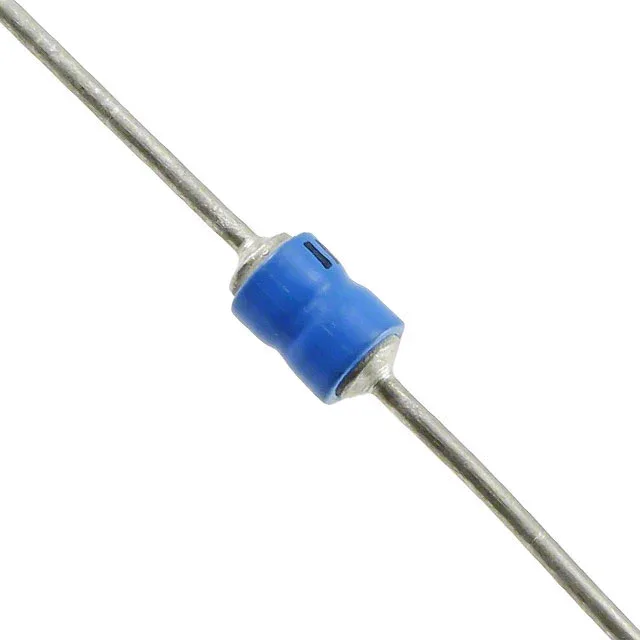
The 1N6466 is a 500W peak pulse Zener diode from Microchip Technology, designed for general-purpose circuit protection in through-hole axial packages (B, Axial). Its 33V minimum breakdown voltage and 30.5V reverse standoff make it a fit for clamping transients on 24V to 30V DC rails where the normal operating voltage stays below the standoff threshold. With a single unidirectional channel and a peak pulse current rating of 63A under the 8/20µs waveform, this diode handles moderate surge events without power line protection features — it is a straightforward shunt clamp, not a TVS array or multi-line protector.
Breakdown voltage and clamping — the numbers that matter for rail protection
The 33V minimum breakdown and 47.5V maximum clamping at Ipp define the protection window. A 30.5V standoff means the diode stays off below that rail voltage; once the transient pushes above 33V the diode starts conducting, clamping the spike to 47.5V worst-case. For a 24V nominal bus, that leaves a 6.5V margin before the diode turns on — enough to avoid nuisance triggering from normal ripple. The 500W peak pulse rating at the 10/1000µs waveform is the energy-handling ceiling. In a 24V system with a 63A peak current (8/20µs), the diode absorbs the surge without exceeding its thermal limit, provided the duty cycle is low. The 175°C maximum junction temperature gives headroom for high-ambient environments like industrial enclosures or under-hood electronics.
The through-hole axial package is a standard form factor that remains widely supported across distribution channels.
Package and mounting — through-hole axial
The B, Axial package is a two-lead through-hole format with a glass or epoxy body. The lead spacing and body diameter follow the standard JEDEC outline for axial-lead Zener diodes. Mounting requires a drilled PCB with plated through-holes; the leads are typically bent and soldered on the opposite side.