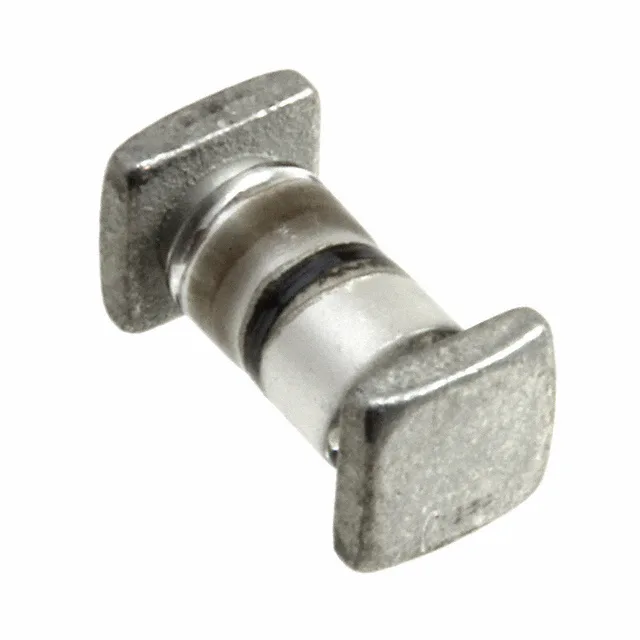
Active Zener TVS for 11.4V rail clamping
The 1N6110AUS/TR: Clamping is specified at 21V max at 23.8A peak pulse current. This is a single bidirectional channel device — it clamps both polarities equally, which simplifies layout when the protected line swings above and below ground. The SQ-MELF B package (surface-mount) is a hermetic ceramic body — no moisture sensitivity level (MSL) concern, suitable for high-reliability and sealed assemblies.
The 14.25V minimum breakdown voltage is the threshold where the device starts conducting avalanche current. For an 11.4V nominal rail, this gives roughly 2.85V of headroom — enough to avoid nuisance triggering from normal ripple or transients below the standoff level. A downstream regulator or IC rated for at least 21V transient tolerance will survive. 500W peak pulse power is the device's surge handling capability under the standard 10/1000µs test waveform. For a given clamping voltage, this translates to a peak current of 23.8A. If the application's surge profile differs (e.g., 8/20µs), the derating curve in the datasheet applies — but the 500W rating is a reliable starting point for rail protection in general-purpose and industrial systems.