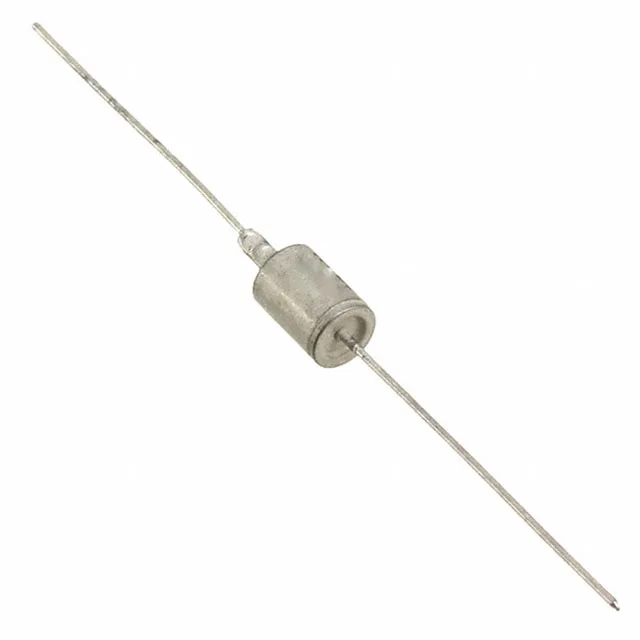
Transient suppressor for 82 V rails — bidirectional clamp in a DO-13 can
The 1N6063AE3/TR: It clamps at 137 V max when the surge current hits 11 A, and its 82 V reverse standoff means it sits across an 82 V DC bus without conducting during normal operation. One bidirectional channel handles both positive and negative transients — no need for back-to-back series diodes on a single rail.
Peak pulse power and clamping — sizing the protection margin
The 137 V clamping voltage is the upper bound the downstream circuitry must survive. Breakdown voltage min is 95 V — that is the threshold where the device starts to conduct. Between 82 V standoff and 95 V breakdown the part is off, giving a guard band against rail ripple and tolerance.
Active production — DO-13 through-hole sourcing
The DO-13 axial package is a legacy through-hole footprint; verify the hole pattern on your PCB matches the lead diameter before committing the BOM position.
Temperature range and environment — military span, no power-line protection
The 175°C TJ(max) gives headroom when the device absorbs repetitive pulses. Power Line Protection is listed as No — this TVS is designed for signal or low-voltage DC bus protection, not AC mains or high-energy power-line clamping.