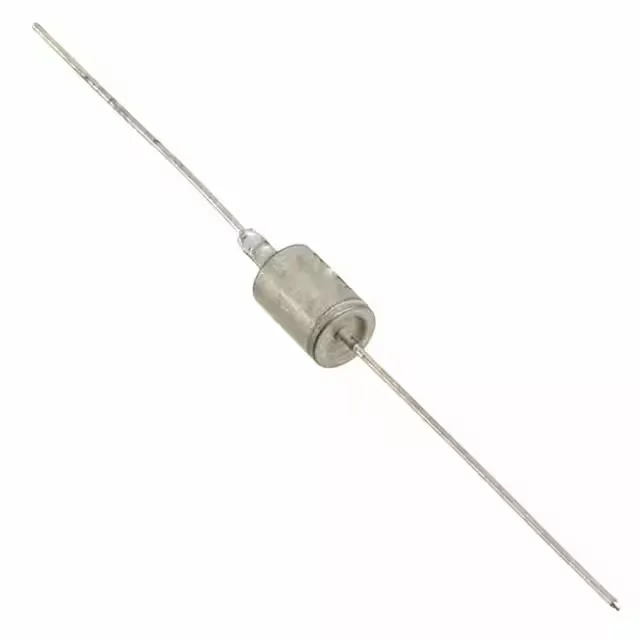
What this Zener TVS diode protects and where it goes
The 1N6052A/TR: It clamps transients on a 30V nominal rail, with a minimum breakdown voltage of 34.2V and a maximum clamping voltage of 49.9V at the rated peak pulse current of 30A.
Above 34.2V (minimum breakdown), the diode starts clamping; the 49.9V maximum clamp at 30A peak pulse current is the voltage the protected circuitry must survive. The 1500W peak pulse power rating (10/1000µs) is the standard telecom surge waveform — a single 30A pulse lasting 1 ms. For shorter pulses (like ESD), the diode handles much higher peak current; for longer surges, derate per the datasheet's pulse-width curve. Bidirectional operation (single channel) means one device clamps both polarities — no need for series back-to-back arrangement on AC signal lines or bipolar supplies.
What to check before substituting
Substituting a unipolar part on a bipolar rail leaves one polarity unprotected. The DO-13 footprint is shared with other 1N60xx series devices, but verify the breakdown voltage and standoff match your rail. For a pin-compatible alternative within the same Microchip family, compare the 1N60xx series ratings — the package and pinout are identical across the range; the difference is the voltage selection.