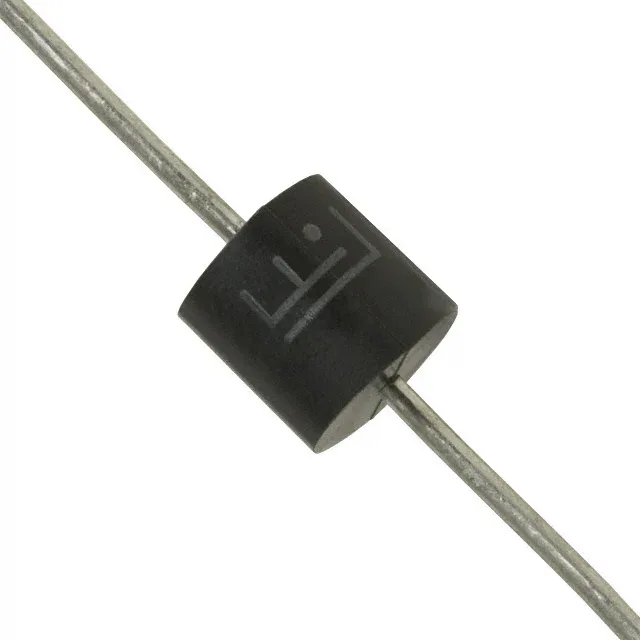
The 5KP11CA-B: At 280.2A peak pulse current the clamping voltage sits at 18.2V, which is the voltage across the device when it is actively conducting the full rated transient current into its clamp state. For the circuit designer, the peak pulse rating and the clamping voltage together define how much overvoltage the downstream load actually sees when a surge hits.
Three voltages — standoff, breakdown, and clamping
The reverse standoff of 11V is the working voltage the diode blocks in normal operation. The minimum breakdown of 12.2V is where it begins to conduct; above that threshold the device moves into avalanche and the clamp circuit takes over. The 18.2V maximum clamping voltage is the let-through voltage at full peak current — a supply rail protected by this TVS must tolerate 18.2V briefly during a fault, not 11V continuously. This simplifies the protection scheme on AC-coupled lines or on circuits where the common-mode voltage can swing both ways.
Wide temperature grade and through-hole form factor
The P600 axial body mounts through-hole on the PCB; the lead bend radius and mounting distance from the board surface are specified in the Littelfuse datasheet for the P600 package to maintain the thermal derating curve under surge conditions. General-purpose application rating means it is qualified for transient suppression across industrial, communications, and consumer equipment — anywhere inductive loads, motor switching, or lightning-entry points create transient risk. The absence of a power-line protection flag indicates this is not listed for direct AC mains service; it suits secondary protection on DC rails and signal lines downstream of an input filter.
Listed Active by Littelfuse Inc. — current-production with standard availability through authorized distribution. The base product family is 5KP1; the CA bidirectional variant and the standalone unidirectional 5KP11A share the same 5KP series footprint, so cross-references within the series apply when the bidirectional function is not required by the design.