TVS diode standoff and clamping — what 90V and 146V mean for the circuit
The 5.0SMDJ90CA-T7: The 90V reverse standoff (typ) is the working voltage below which the TVS stays off and draws only leakage current — the telecom rail it protects should sit cleanly below this so the diode never activates during normal operation. When a transient exceeds the 100V minimum breakdown, the device enters conduction and clamps the voltage at 146V maximum at the rated 34.3A peak pulse current — the downstream circuit sees 146V, not the full surge. A faster 8/20µs event delivers the same energy at higher peak current, so check that the application surge profile matches the datasheet test condition.
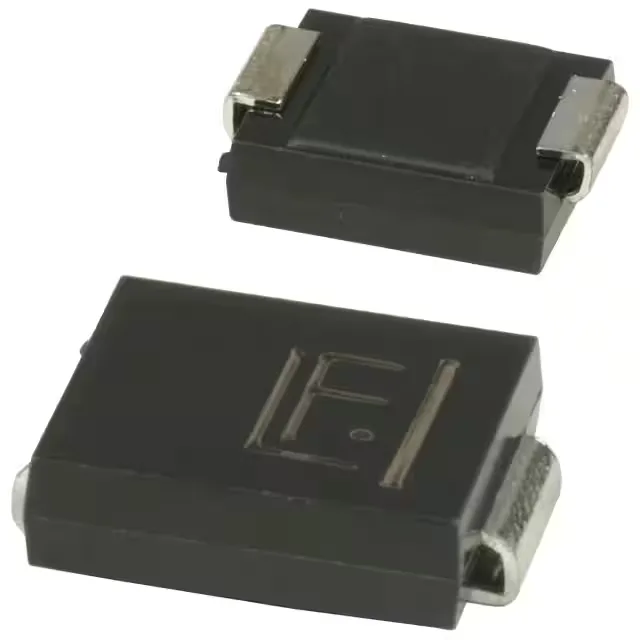
DO-214AB package — standard SMCJ footprint for telecom board layouts
The DO-214AB (SMCJ) package is the dominant industry footprint for telecom-grade TVS diodes — the cathode bar in the package markings identifies pin 1 on the bidirectional part. Thermal performance on the SMCJ relies on the cathode pad soldered to a generous copper land — the 150°C maximum junction temperature and -65°C cold start rating make this suitable for outdoor telecom enclosures where temperature cycling is routine.