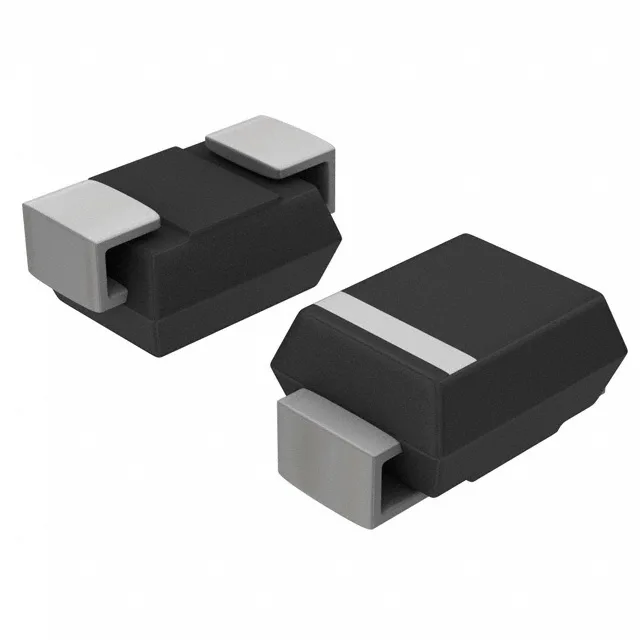
Peak pulse current and clamping voltage — the design-in trade
The 5.0SMDJ6.5CASHRAT7: The datasheet clamps at 11.2 V maximum when the device is absorbing 446.4 A peak pulse current. The clamping voltage at a given event is a function of the peak current magnitude — for a lower-amplitude surge the clamping voltage sits below the 11.2 V datasheet maximum. This means the downstream IC or bus sees 11.2 V as the worst-case let-through at rated event energy; sizing the protected node's abs-max against 11.2 V, not the standoff rating, is the correct design-in check.
Telecom deployment and thermal margin
The primary application listed is telecom infrastructure. The 5 kW rating is a function of the transient waveform duration — shorter events (8/20 µs) absorb proportionally higher peak current at the same energy, so the application waveform shape relative to the 10/1000 µs test standard matters when validating the actual clamping let-through.
Littelfuse lists the 5.0SMDJ6.5CASHRAT7 as Active. Sourced through independent distribution on a quoted-to-order basis — availability and current lead times are confirmed at RFQ.